Ukraine destroys railway bridge in Crimea: Why it matters


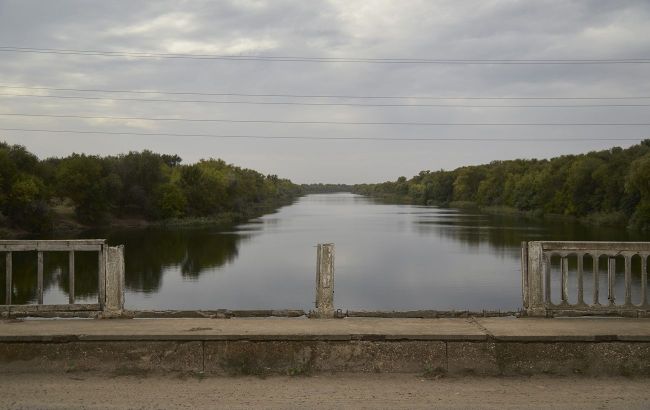 Photo: The North Crimean Canal, built during the Soviet era, has come into the spotlight following a series of Ukrainian military strikes (Getty Images)
The North Crimean Canal was the main source of fresh water for Crimea for decades and, after the occupation, also became an important route for Russian military logistics. Today, June 23, one of the railway crossings over this strategically significant waterway on the peninsula was lost.
Key points:
- Before 2014, the North Crimean Canal supplied up to 85% of Crimea’s fresh water needs.
- The canal plays an important role in Russian military logistics.
- Following the destruction of the Kakhovka Hydroelectric Power Plant in 2023, the flow of Dnipro water through the canal ceased.
- Before 2014, the North Crimean Canal supplied up to 85% of Crimea’s fresh water needs.
- On June 23, the Special Operations Forces announced the complete destruction of a bridge over the North Crimean Canal near Rozdolne.
- On June 18 and 19, Ukraine’s Defense Forces struck railway bridges near Rozdolne and Vladyslavivka.
What we know about the North Crimean Canal
The North Crimean Canal is one of the largest hydraulic engineering projects built during the Soviet era. It originates from the former Kakhovka Reservoir on the Dnipro River and runs through the Kherson region to Russian-occupied Crimea.
Before 2014, the canal supplied up to 85% of Crimea's fresh water needs. Its water was used both for irrigating agricultural land and for supplying cities such as Simferopol, Sevastopol, Feodosia, Sudak, and the Kerch Peninsula.
After Russia's occupation of Crimea, Ukraine cut off the water supply through the canal. Russia restored the flow after seizing the Kakhovka Hydroelectric Power Plant in February 2022.
However, following the destruction of the Kakhovka dam in the summer of 2023, the supply of Dnipro water through the canal ceased once again.
Why the canal matters
In addition to its role in water supply, the area around the North Crimean Canal has significant military logistical importance.
Road and railway crossings along the canal are used to supply Russian forces in Crimea and support military operations on the southern front.
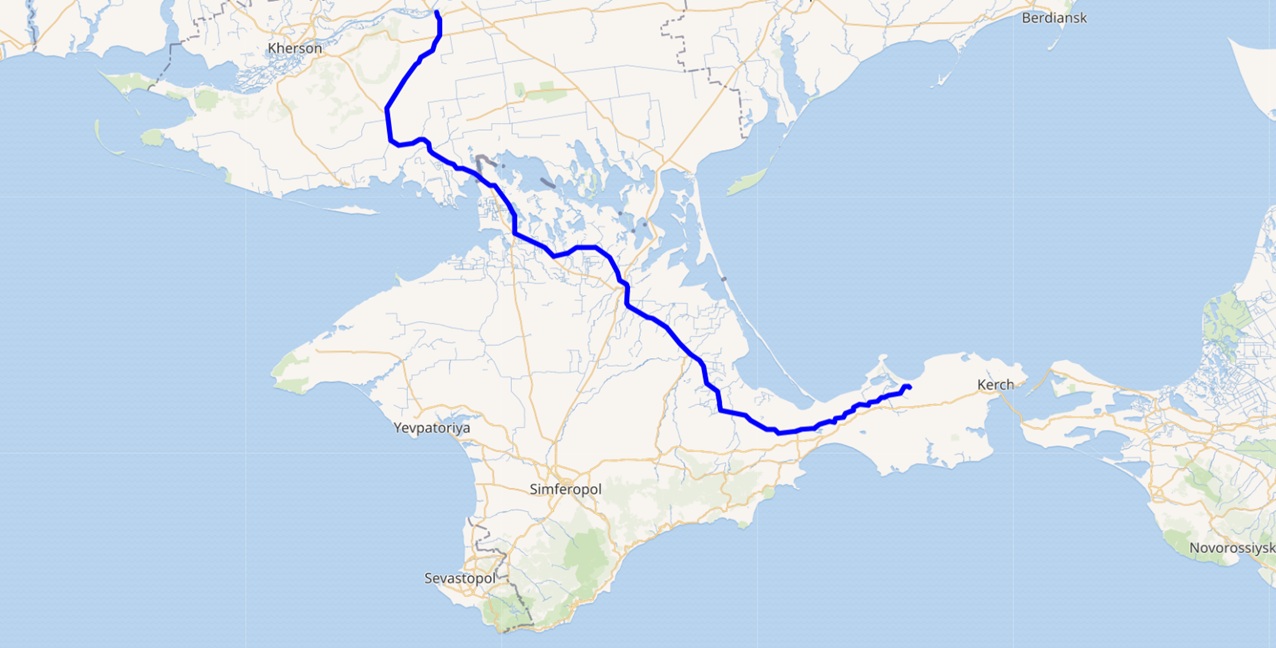
Photo: North Crimean Canal on the map (Wikipedia.org)
Through them, the occupying forces transport military equipment, ammunition, fuel, and personnel.
The North Crimean Canal stretches for more than 400 km and includes over 10 railway bridges and around 100 road bridges and crossings. Some of them are used by Russian forces to supply their grouping in occupied Crimea.
A series of bridge strikes
In June 2026, Ukraine’s Defense Forces began striking transport infrastructure around the canal.
First, several road bridges were attacked. On June 18 and 19, Ukrainian forces struck railway bridges in the areas of Rozdolne and Vladyslavivka. These sites were being used by Russian forces for military logistics on the peninsula. But the strikes did not stop there.
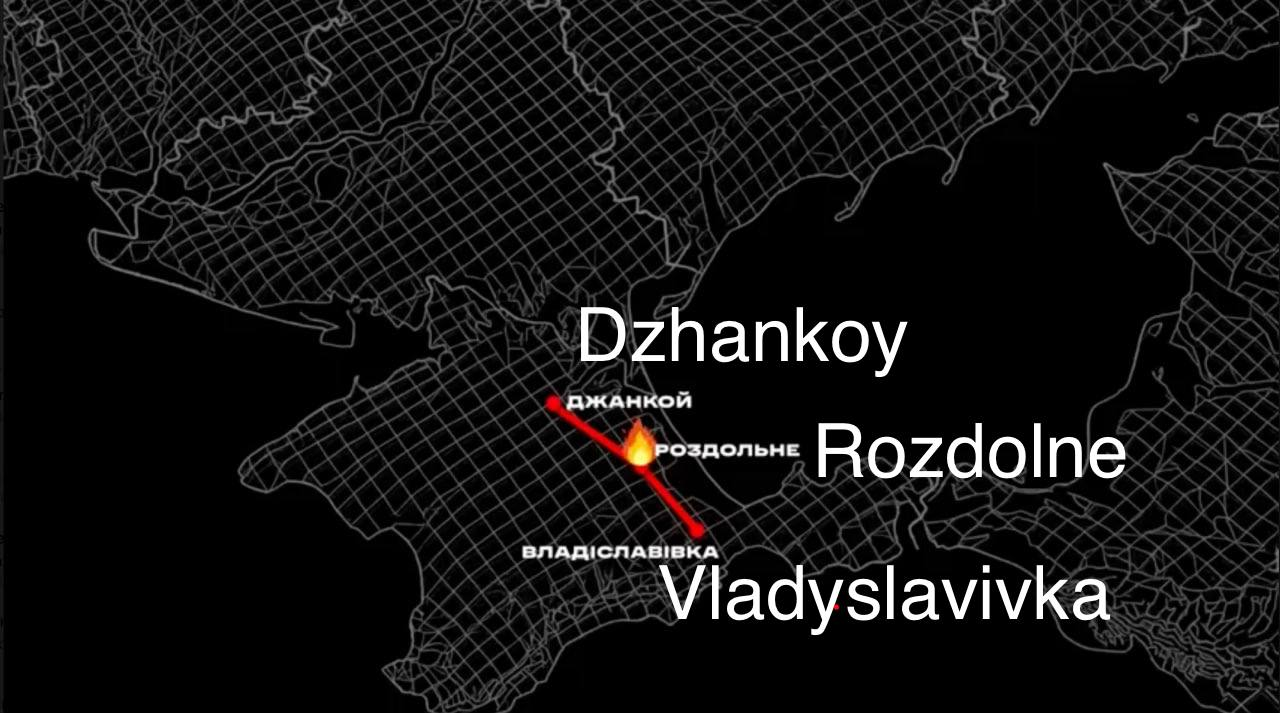
Photo: The destroyed railway bridge over the North Crimean Canal is located near the village of Rozdolne (screenshot)
On June 23, Ukraine’s Special Operations Forces (SSO) announced the destruction of a railway bridge over the North Crimean Canal. The SSO commented briefly, "The first one is gone."
Later, the fighters released footage of the strike on the bridge, including hits on its track section and a repair train.
The Special Operations Forces emphasized that the railway bridge near Rozdolne was part of a transport corridor used to move cargo, resources, and military supplies in two key directions:
- From the territory of Russia through Crimea — to support the grouping of forces in the southern direction;
- Within the peninsula — to maintain the functioning of Crimea’s military infrastructure.
"The SSO drones, on the night of June 22, delivered precise strikes that destroyed the bridge: both the railway track was damaged and one of the spans collapsed," the Special Operations Forces said.
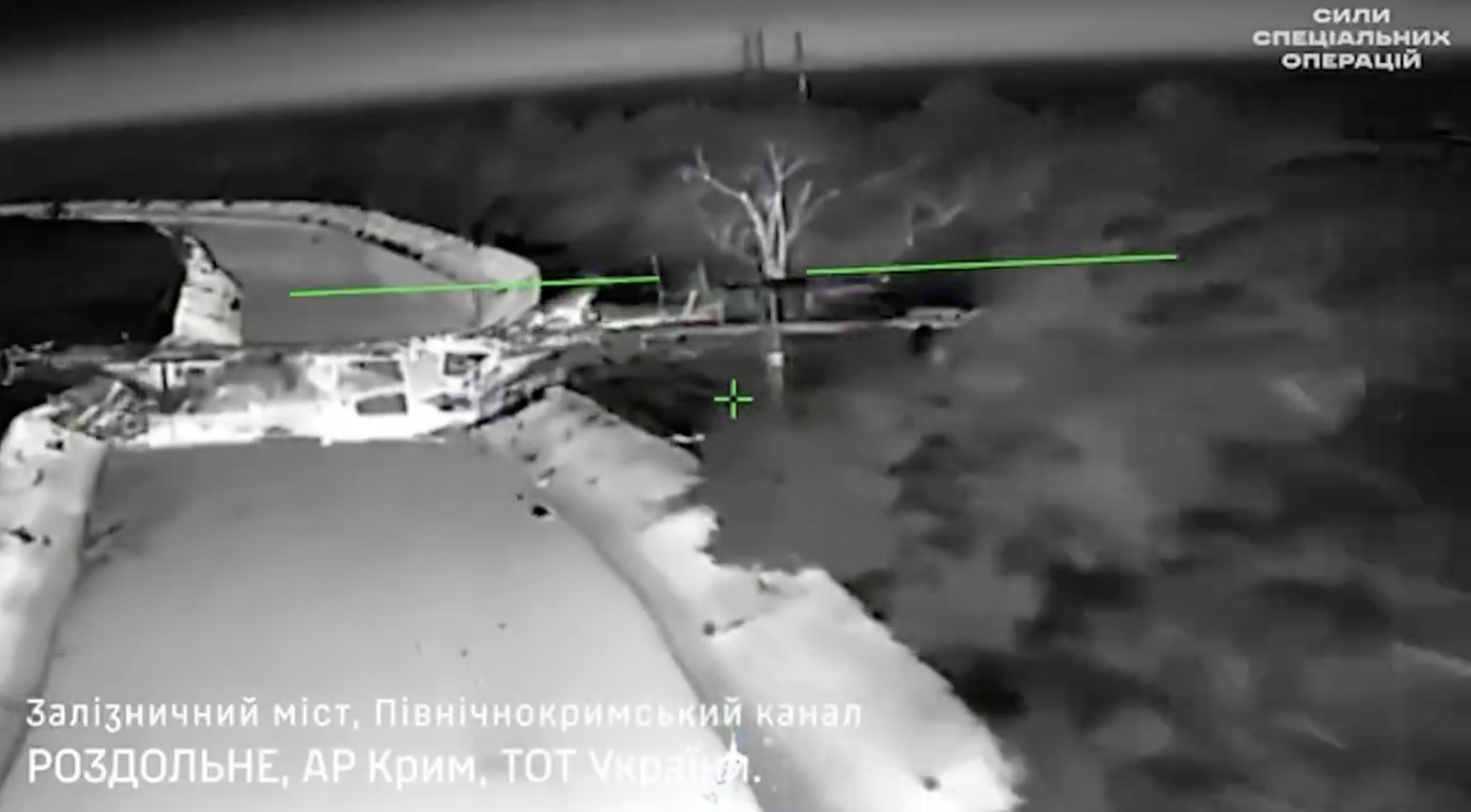
Photo: Destroyed railway bridge near Rozdolne (Crimea), North Crimean Canal (screenshot)
Meanwhile, underground resistance groups linked to Ukraine’s Special Operations Forces reported the arrival of specialized railway repair equipment at the site. A second phase of the mission was launched.
On the night of June 23, SSO drones struck both the repair equipment and the remaining parts of the bridge again.