Weapons, drones and troops: Ukraine details Russia's use of Zaporizhzhia nuclear plant

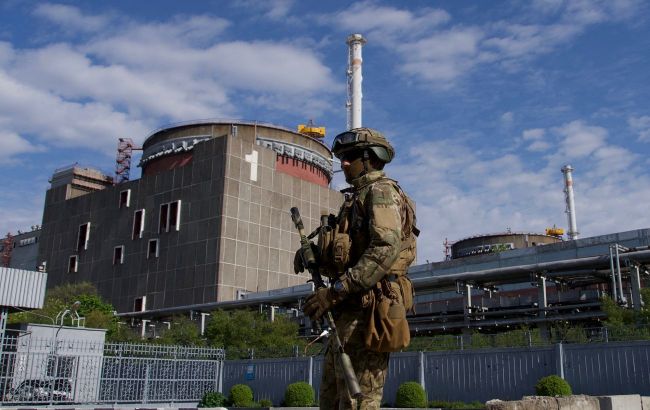 The Russian-occupied Zaporizhzhia Nuclear Power Plant (photo: Getty Images)
Russian forces have turned the Russian-occupied Zaporizhzhia Nuclear Power Plant into a military base, where they are storing weapons and launching attack drones, Ukraine's Defense Intelligence (HUR) said.
All six nuclear reactors at the plant are currently in a state of cold shutdown. Despite this, the Russian army has placed military equipment directly in the turbine halls of reactor units 1, 2, 5, and 6.
In the basements and bomb shelters of the Zaporizhzhia Nuclear Power Plant, Russian forces have created ammunition and weapons depots. Equipment and ammunition are also being hidden under overpasses and technical passageways between buildings, while machine-gun positions and missile systems have been installed on the roofs of the reactor buildings.
In addition, Russian forces have mined some technical facilities near the shoreline of the former Kakhovka Reservoir.
Drone control centers and restrictions on the International Atomic Energy Agency
Russian forces are deploying control centers for Gerbera-Seeker and Geran-Seeker attack drones on the plant's territory. Employees of Russia's Alabuga special economic zone, including underage students, are involved in operating the drones.
The facility is guarded by a contingent of the Russian National Guard numbering around 1,500 personnel. At the same time, experts from the International Atomic Energy Agency do not have unrestricted access to the reactor units and technical halls. Russian forces allow them access only according to a pre-approved plan and route, preventing international experts from objectively assessing the actual situation.
Risk of blackouts and water shortages
The situation with power supply and cooling at the plant remains critical. Before the occupation, the Zaporizhzhia Nuclear Power Plant had 10 external power lines, but now only one power line remains operational because of Russian aggression. As a result, another blackout occurred at the plant on July 3, 2026, the 21st since the start of the full-scale invasion.
Russian forces are also failing to maintain the required water level in the cooling pond. In July 2026, it fell to 12.86 meters, while the minimum required level is 15 meters. Of the 57 wells needed for the cooling system, only 11 are equipped with high-capacity pumps.
The water shortage at the site is currently being offset by supplies from the discharge channel of the Zaporizhzhia Thermal Power Plant. This situation threatens the operation of the reactor cooling systems and the spent nuclear fuel storage facility.
Staff shortages and pressure on personnel
The occupied Zaporizhzhia Nuclear Power Plant continues to face an acute shortage of qualified personnel. Before the full-scale war, around 11,000 people worked at the plant, while approximately 7,500 remain now. This number includes 500 employees of an outsourcing company that does not even have a license to carry out work at a nuclear facility.
All Ukrainian specialists are being forced under threat of dismissal to sign contracts with Rosatom (Russia's state-owned nuclear energy corporation). At the same time, personnel brought in from Russia do not have the qualifications required to properly maintain the Zaporizhzhia Nuclear Power Plant because of significant technical differences between the Ukrainian plant and Russian nuclear facilities.
Repairs to a key power transmission line and other energy infrastructure facilities at the Zaporizhzhia Nuclear Power Plant were recently completed.
At the same time, it is not yet possible to restore its operation because of damage to the substation.