War in Iran pushes oil markets into uncertainty: Bloomberg outlines 3 scenarios for global economy

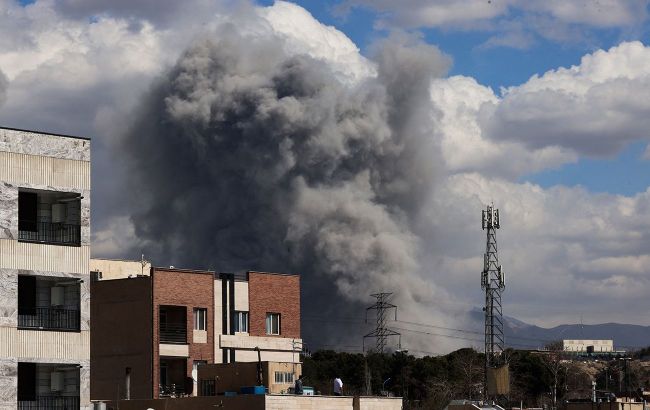 War in Iran leads world toward crisis (photo: Getty Images)
Strikes by the United States and Israel on Iran have significantly raised energy prices and threaten the global economy with a prolonged crisis, Bloomberg reports.
Read also: Dollar surges, fuel prices spike: How Middle East war's hitting global economy
In Europe, sustained growth in energy prices will lead to a recession in the economy. For the United States, a rise in gas and oil prices will put the Federal Reserve in a difficult position — it will be stuck between a war that increases inflation and a president who demands a reduction in interest rates.
On the other hand, for China, termination of imports of Iranian oil at low prices will likely increase pressure from the tariffs of White House and the collapse of the real estate market.
Worst scenario
Bloomberg assumes that under an unfavorable scenario, prolonged closure of the Strait of Hormuz, through which about 20 percent of global oil is exported, will increase prices by 80 percent from the pre-war level to about 108 dollars per barrel. Prices may remain at a high level until the fourth quarter of the year.
The range of uncertainty is wide. Significant damage to the energy infrastructure of the Persian Gulf — for example, more drone strikes on Saudi Aramco facilities or excessive market reaction — could significantly increase prices. Partial destruction or a shorter conflict would mean that prices will start to decline earlier.
A sharp increase in oil prices affects the economy through several channels. Prices increase costs for consumers and businesses, reducing purchasing power. They also contribute to inflation by raising prices for transport and everything related to petrochemical products.
Trump will also face political danger. Neither inflation nor foreign wars are popular among voters in the United States.
Consequences of the crisis for Europe
For other major developed economies — the eurozone and Britain — the story of price growth is more straightforward. Without any significant energy producers that could benefit from higher oil prices, they face a greater blow to gross domestic product. Europe is also more exposed to the impact of natural gas prices.
The model of Bloomberg Economics indicates a hit to gross domestic product from the energy shock of about 0.6 percent for the eurozone and 0.5 percent for Britain.
Will China also lose?
China is a major importer of oil. Iran and Venezuela together made up a significant share of its purchases, and due to problems in these countries, China was able to buy oil at a discount. Buying oil at 108 dollars per barrel would add about 0.8 percentage points to inflation.
Growth of oil prices could intensify stress from Trump tariffs and slow the bursting of the real estate market bubble.
Who benefits from the rise in oil prices?
Among the winners from disruptions in the supply of oil and gas will be Russia. A sharp increase in oil prices would effectively eliminate its budget deficit, giving the Kremlin more money to spend on the war against Ukraine.
Moderate and optimistic scenarios
Under a less extreme scenario, hostilities will continue without further large-scale strikes on energy infrastructure or prolonged disruptions in the Strait of Hormuz. Oil prices will fluctuate around 80 dollars per barrel.
In this case, inflation will increase moderately — about 0.3 percentage points in the United States and about 0.5 percentage points in Britain and the eurozone.
In the least extreme case United States and Iran will reach a ceasefire. Disruptions will decrease, and the oil price will fall to 65 dollars per barrel.
Whether the conflict in the Middle East will become the beginning of a new global energy and inflation wave, and whether Ukraine will feel it — read in the material by RBC-Ukraine.