US weapons stocks hit historic lows: Vance gets stark warning on Iran war

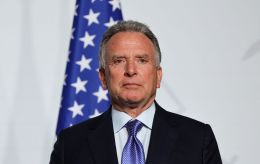
 JD Vance (photo: Getty Images)
In the spring and summer of 2026, US Vice President JD Vance directly called American military commanders in the Middle East, Europe, and Asia to get their candid assessment of the war with Iran. What he heard raised even greater concerns than the White House's official statements, according to The New York Times.
According to sources, Vance, who had opposed the war from the beginning and whom US President Donald Trump tasked with helping to end the conflict, wanted to hear the commanders' individual views before they were consolidated into a single Pentagon assessment.
The conversations covered a wide range of issues related to the war, including its objectives, tactics, casualty estimates, Iranian actions in the Strait of Hormuz, the extent to which they had adapted, and what strikes the Iranian government could withstand.
Vance also requested a detailed report on what remained in the commanders' stockpiles and how sending weapons to the Middle East would affect their ability to deter China, Russia, and North Korea.
On the latter point, commanders said the war was depleting critical US weapons stockpiles, including Patriot interceptor missiles. By late spring, fewer than 100 of them remained in one theater of operations.
In addition, the war depleted stocks of Army Tactical Missile Systems, which have a range of 190 miles, as well as stocks of Precision Strike Missiles that were intended to replace them. According to the military, stocks of critical munitions were at their lowest level in history.
Sources also said that after some of the conversations, Vance developed deep concerns about the overall strategy and the prospects for success. The assessments clearly showed the incredible suffering the Iranian government was prepared to endure in its fight for survival.
As a result, the vice president took these findings into account in his private conversations with Trump and their closest advisers. At the same time, Trump himself was receiving increasing amounts of information in briefings from Chairman of the Joint Chiefs of Staff Dan Caine about the strained state of US stockpiles and the resilience of the Iranian military, something he initially found difficult to believe.
It is also worth adding that in private conversations, Trump sharply criticized media reports that detailed the decline in stockpiles. He called journalists traitors for covering the issue.
Following these reports, government investigators subjected dozens of senior military officers at the Pentagon to polygraph tests.
Several officials feared that this could signal US weakness and send a message to China and Russia, which are closely monitoring American stockpiles.
US-Iran war
US President Donald Trump recently said that the war with Iran could end as early as November, after the US midterm elections. He believes that immediately afterward, gasoline prices in the country will fall sharply.
At the same time, according to the WSJ, senior White House officials discussed with Trump the possibility that the war with Iran could last until the end of his presidential term. Officials said Iran could continue to resist despite US pressure.