US-Ukraine intelligence sharing returns to pre-2025 levels

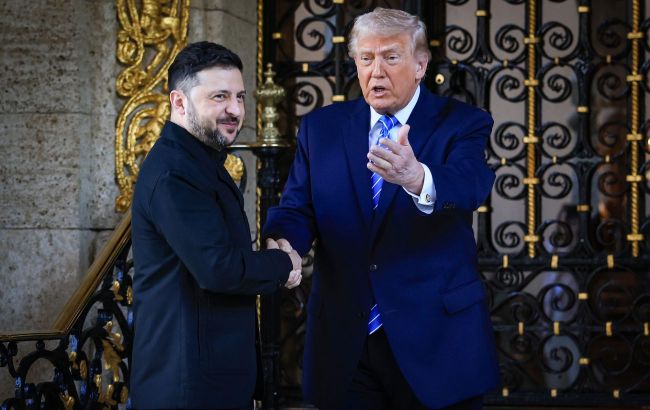 Ukrainian President Volodymyr Zelenskyy and United States President Donald Trump (photo: Getty Images)
Intelligence sharing between Washington and Kyiv has improved significantly after the White House temporarily cut off access to intelligence in March 2025 following an unsuccessful meeting between Ukrainian President Volodymyr Zelenskyy and United States President Donald Trump in the Oval Office, Politico reports.
What senators say about the improvement
Democratic Senator Mark Warner, the top Democrat on the Senate Intelligence Committee, confirmed that cooperation has improved.
"I don't want to get into any specifics, but it has improved. That, combined with I think, the really smart, long-range drone strategy has really improved the Ukrainians' position," Warner said.
Republican Senators John Cornyn and Roger Wicker, chairman of the Senate Armed Services Committee, also agreed that intelligence sharing has increased.
"It sure seems like that," Cornyn said. "Everybody loves a winner and looks like Ukraine has turned the tide."
Democratic Senator Tim Kaine said he had personally seen evidence of the improvement, comparing his visits in April 2025 and July 2026.
"I detect more confidence in the communication," he said.
How intelligence sharing affected strikes on Russia
According to George Barros, Director of Geospatial Intelligence and Open-Source Intelligence at the Institute for the Study of War, Trump last year authorized intelligence sharing for Ukrainian strikes on Russian energy infrastructure, which became key to creating the "proper incentive structure" intended to push Moscow toward negotiations.
"Those strikes were supercharged, and they became much more effective only starting in 2025 with the new Trump administration, when intelligence-sharing started to help provide the Ukrainians better information to make their strikes much more effective," Barros said.
According to him, United States early warning systems have been sending alerts to Ukraine about incoming Russian missile attacks since the first days of the war.
White House position
"The president wants this war settled so the senseless killing ends. The president and his team remain committed to continuing to play a constructive role in ending the war between Russia and Ukraine, and he remains optimistic that we'll ultimately get a peace deal done," the White House said.
The Central Intelligence Agency (CIA) and the Office of the Director of National Intelligence did not respond to requests for comment.
Why it also benefits the United States
Former United States Ambassador to Ukraine (2003–2006) John Herbst, who still maintains contacts with Ukrainian officials, said that Washington also benefits from Kyiv's intelligence.
"There's no doubt of the following: Ukraine has outstanding intelligence on Russia," he said.
Zelenskyy tried to use this during talks with the United States regarding Iran. Ahead of his July visit to the Oval Office, he said Kyiv would provide Trump with evidence that Russia is assisting Tehran.
"When you talk to Ukrainian intelligence officials, you hear confident insights into what is going on in Moscow, and not just in the Kremlin," said Stephen Sestanovich, Senior Fellow for Russian and Eurasian Studies at the Council on Foreign Relations.
Why battlefield success also matters
According to experts, Ukraine's biggest advantage in its relationship with the United States is now its success on the battlefield. The momentum in the war has increased significantly thanks to inexpensive drones and strikes deep inside Russian territory.
"No one — including our defense establishment and, frankly, maybe even including me — a year ago thought they'd be in this position right now," Warner acknowledged.
Despite the improvement in intelligence sharing, the issue of Patriot missiles remains more complicated. According to Reuters, the United States continues negotiations with Ukraine on the joint production of interceptor missiles despite Trump's own reservations.
On July 8, Zelenskyy met with Trump on the sidelines of the NATO summit, after which the United States president said Washington could allow Ukraine to establish its own production of interceptor missiles.
Later, on July 28, the two sides raised the issue again during talks, discussing both the localization of interceptor missile production and efforts to advance the peace process.
However, on July 31, Trump said the United States had not granted Ukraine a license to produce interceptor missiles for the Patriot system, and that this might not happen in the future. According to Trump, the United States must be "very careful" about sharing the secrets of these weapons.