US offers Russia frozen assets, Lukoil deal and other incentives for limited ceasefire - NYT

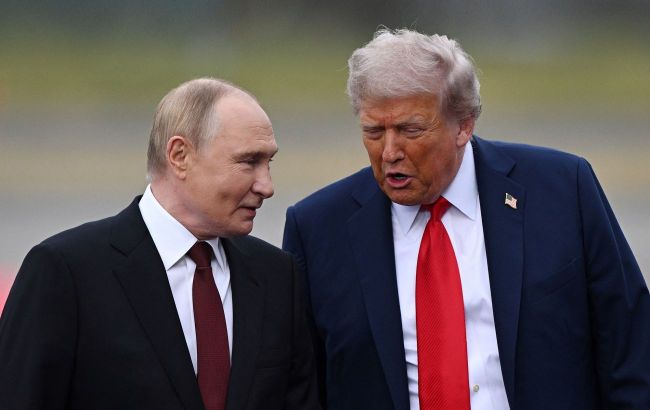 Photo: Russian leader Vladimir Putin and US President Donald Trump (Getty Images)
US President Donald Trump's administration has offered Russia several economic incentives if Moscow agrees to a ceasefire with Ukraine covering energy infrastructure or maritime operations, according to The New York Times.
According to officials familiar with the negotiations, the United States has proposed three economic incentives to persuade Moscow to agree to a limited truce, either involving energy infrastructure or at sea.
One proposal involved unlocking billions of dollars in Russian sovereign assets frozen in the West. According to the officials, the funds were being considered as an upfront incentive for a partial ceasefire, rather than a reward for reaching an agreement.
The proposal revived an idea from last year to unfreeze Russian assets. At the time, the plan involved releasing up to $100 billion.
The United States also revisited a plan to sell part of the Russian oil giant Lukoil's shares as part of a multibillion-dollar deal. Under the proposal, a group of Middle Eastern investors would take part, including some with business ties to the American negotiators.
In addition, US President Donald Trump's special envoys, Steve Witkoff and Jared Kushner, revived a US proposal that would allow Belarus to export potash.
According to the sources, Kyiv refrained from categorically rejecting any of the proposals but insisted on safeguards.
For example, Ukraine proposed reciprocal dollar payments to Kyiv using the frozen assets, or guarantees of additional military assistance in the event of any ceasefire violation.
US-Russia diesel deal
As a reminder, the US Treasury Department authorized Russian diesel shipments, exempting them from sanctions until April 7, 2027.
Russia will supply millions of tons of diesel fuel to the US and global markets. The US Treasury Department is already issuing a temporary license that will allow the aggressor country to begin deliveries.
Meanwhile, US President Donald Trump recently claimed that Ukraine's strikes on Russian oil refineries were responsible for rising diesel prices, rather than the war in the Middle East.
Over the past few weeks, Trump has repeatedly said Ukraine should stop striking Russian infrastructure, arguing that the attacks are causing a global diesel shortage.
Ukraine considers the US-Russia diesel deal unfair and has compared it to last year's summit in Alaska. Kyiv would support easing sanctions on Russia only in exchange for an energy ceasefire.
According to a source cited by RBC-Ukraine, Ukraine will continue striking Russian oil refineries unless the parties reach an agreement on an energy ceasefire.