US Navy hunts Iranian sea mines in Strait of Hormuz

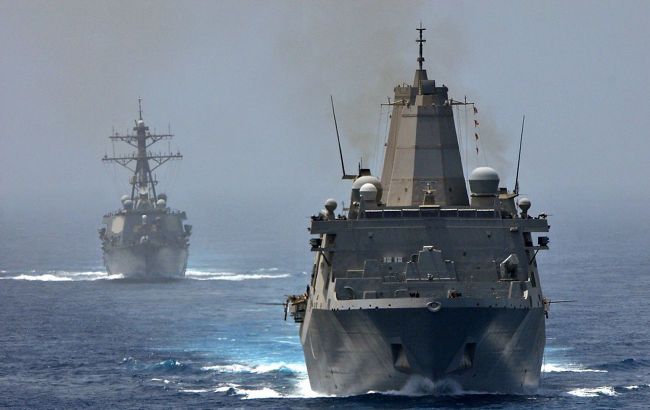 Iranian mines already in the water. How the US Navy is searching for deadly weapons in the strait (photo: flickr.com)
The US Navy has received a new mission in the Strait of Hormuz: to find and destroy Iranian sea mines before they paralyze the oil trade and deepen the energy crisis, Politico reports, citing a US official familiar with the ongoing operations.
Mines already in the water
The United States military intelligence believes that some Iranian mines have already been deployed in the strait. Iran's stockpiles include thousands of such devices — and although the United States and Israel campaign has partially depleted them, the arsenal has not been fully destroyed.
If a mine were to damage or sink a commercial vessel, the movement of oil tankers through the strait could either slow sharply or stop altogether.
More than 20 United States ships are in the region
More than a dozen United States warships are currently in and around the Persian Gulf, with several more heading there.
The fleet's main task is to enforce the naval blockade of Iranian vessels introduced by United States President Donald Trump. At the same time, the ships are also carrying out a mine countermeasure mission: surface vessels, helicopters, and underwater drones are involved in the search.
The following will soon arrive in the region:
- Two Avenger-class ships — United States Ship Chief and United States Ship Pioneer, which departed Singapore on Friday;
- The Boxer amphibious group with 2,200 Marines on board, moving through the Pacific Ocean;
- Three littoral ships from Bahrain equipped with mine warfare systems.
When all units assemble, the total number of United States ships in the region will exceed 20, and the number of Marines at sea will reach about 5,000.
The Navy compares mine clearance to picking dandelions
Mine hunting "is like picking dandelions in your yard so that you can create a path you can walk across your yard and not step on a dandelion," said Steven Wills, a retired Navy officer at the United States Navy League Center for Maritime Strategy.
According to him, the problem is also that a cleared area can be relatively easily mined again by small Iranian boats. This makes the mission continuous and exhausting.
So far, United States ships have not detected any Iranian mines. However, commercial vessels have almost disappeared from the strait — operators are acting cautiously.
United States Central Command chief Admiral Brad Cooper said over the weekend that work had begun on establishing a safe route for ships.
"Today, we began the process of establishing a new passage, and we will share this safe pathway with the maritime industry soon to encourage the free flow of commerce," he said.
Technology against mines
Iran uses several types of mines:
- Those that lie on the seabed and are triggered when a vessel passes above them;
- Those anchored to the bottom by a chain and floating slightly below the surface;
- Drifting mines that move with the current.
For detection, the Americans use underwater drones Knifefish and Kingfish. They scan the seabed using sonar and detect any anomalies.
How long will demining take
Retired Navy officer Bryan Clark from the Hudson Institute says that clearing routes may take several weeks, provided that mines are present.
"And if it's not mined and you're just looking to build a safe passage where you're going to lead ships through, that might only take a few days," he added.
The United States and Iran were considering extending the ceasefire for another two weeks to prepare a peace agreement. Neither side wanted a return to active hostilities, but no official confirmation from Washington followed.
Meanwhile, according to Reuters, Iran proposed allowing ships to pass freely through the Omani part of the strait — but only if the United States meets Tehran's demands for security guarantees.