US NATO ambassador Whitaker says Russia stuck in Ukraine

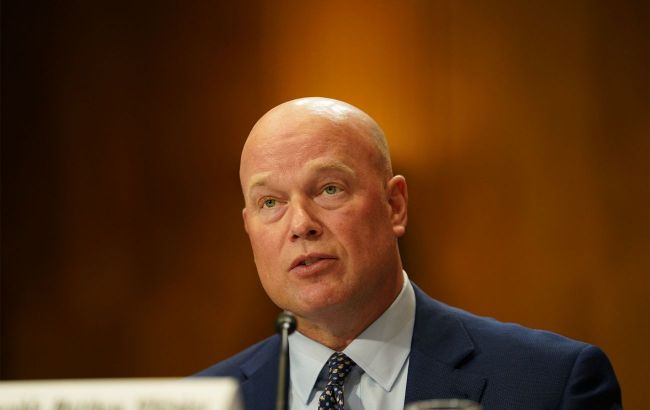 Photo: Matthew Whitaker (Getty Images)
US Representative to NATO Matthew Whitaker states on Fox Business that Russia has become bogged down in Ukraine during its war. At the same time, Moscow may be prepared to take action against a NATO country.
During the conversation, Whitaker emphasizes that the US remains committed to NATO's collective defense, but at the same time, Washington is calling on its allies in Brussels to build up their capabilities to counter threats such as the one that occurred at Leipzig Airport in Germany (referring to a hybrid drone attack).
"As to what Russia will do or won't do, they're bogged down right now in Ukraine. They can't make any progress on the front there," Whitaker says.
He adds that in the near term, the Russian threat to NATO is minimal. However, he stresses that the possibility of Moscow taking certain actions cannot be ruled out.
"That aggressive action, that invasion of Ukraine, the prior annexation of Crimea, that leads us to believe they can be unpredictable and they could be willing to take action against a NATO country," the US Representative states.
At the same time, Whitaker emphasizes that if Russia were to take such a step, it would face a very strong and capable Alliance that is growing stronger every day.
In particular, according to Whitaker, the Alliance is growing stronger thanks to the leadership of US President Donald Trump and the commitment by member nations to increase defense spending, which was agreed upon at the NATO summit in The Hague in 2025.
What else important to know
In August, the agency Bild reported that NATO had developed a concept for ground combat operations in the event of a large-scale Russian attack on Alliance countries.
Specifically, the document outlines a step-by-step response to missile and drone strikes, as well as a ground offensive by Russian forces.
Finnish President Alexander Stubb stated recently that he did not believe Russia would ever want to attack NATO countries. He explained this by citing intelligence data as well as deterrent factors.