US lifts sanctions on Russia's military suppliers: What's behind decision


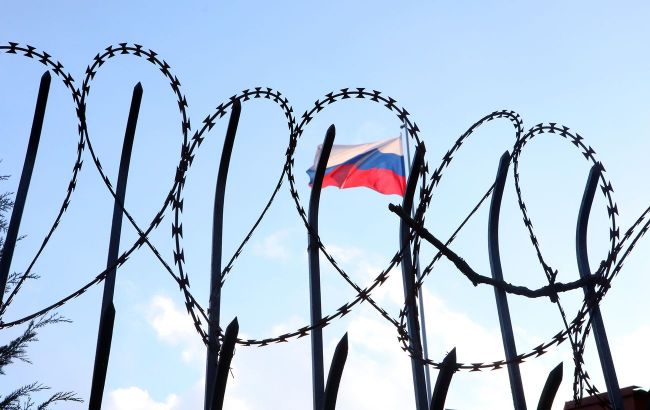 Photo: The US has not changed its policy of sanctions pressure on Russia (Getty Images)
The lifting of US sanctions against companies involved in supplying equipment to Russia's military-industrial complex is most likely an element of limited encouragement amid much stronger pressure that the administration of Donald Trump is exerting, for example, on Russia's energy business.
This was reported by RBC-Ukraine, citing remarks by Oleksii Melnyk, co-director of foreign policy and international security programs and coordinator of international projects at the Razumkov Center.
The expert said that representatives of the companies removed from the sanctions list may have managed to lobby their interests with senior US and Russian officials involved in the negotiations.
"There is a strong component in the negotiations between Kirill Dmitriev (the Kremlin's special representative – ed.) and Steve Witkoff (the US president's special envoy) and Jared Kushner (Donald Trump’s son-in-law – ed.) that relates either to the personal interests of these individuals or to their lobbying of certain interests," the expert added.
Most likely, Oleksii Melnyk explains, the removal of sanctions from a number of companies linked to Russia may be part of the White House administration's "carrot and stick" policy. "Trump has shown that he can impose tough sanctions, but at the same time small incentive rewards are being offered," the Razumkov Center expert said.
Another possible explanation for such a move by the US Treasury could be purely bureaucratic procedure, for example, if one of the companies ceased to exist and was therefore removed from the sanctions list. "One of the tactics used by Russia is to liquidate a sanctioned company and create a new one with a different name, but with the same actors and objectives," Oleksii Melnyk commented.
The expert said that this step by the US Treasury should not be viewed as an intention by the Trump administration to improve conditions for the Putin regime. "To say that the US is openly demonstrating its intention to make life easier for Russia’s military-industrial complex and Russia’s attempts to circumvent sanctions would, in my view, be something of an exaggeration," he said.
As a reminder, on December 18 the US Department of the Treasury published a notice stating that the United States had removed several firms from its sanctions lists that had previously supplied sanctioned equipment to Russia, including for the military-industrial complex. The reasons for this decision were not disclosed.
Those removed from the list included the Cyprus-based company Veles International Limited and the Finnish company Hi-Tech Koneisto, which supplied sanctioned Russian companies with optoelectronic and laboratory equipment.
Sanctions were also lifted on the Dubai-based 365 Days Freight Services FZCO and the Turkish company Etasis, which exported equipment for Russia's military-industrial complex. In addition, the Turkish company CPS Proses Kontrol Urunleri Sanayi Ve Ticaret Anonim Sirketi supplied German and American machine tools to a Russian defense contractor.
At the same time, the administration of Donald Trump imposed tough sanctions against Russia in October. US sanctions targeted Russia’s two largest oil producers, Rosneft and Lukoil (state-owned and privately owned, respectively). These restrictions effectively forced Lukoil to look for buyers for the company's foreign assets. The sanctions were introduced after Vladimir Putin refused to travel for a meeting with Donald Trump in Budapest.
On December 17, Bloomberg reported that the Trump administration is preparing new sanctions against Russia’s energy sector if Putin refuses to support a peace plan that is currently being developed with active involvement from the American side.