US intelligence sees no signs of quick Iran regime collapse - Reuters

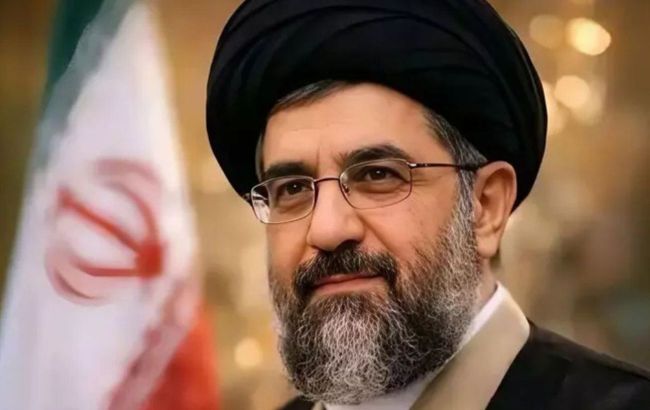 New supreme leader of Iran Mojtaba Khamenei (photo: wikipedia.org)
US intelligence believes Iran government is not at risk of rapid collapse despite nearly two weeks of intense strikes by the United States and Israel, Reuters reports.
According to one of the agency's sources, intelligence reports "consistent analysis that the regime is not in danger" and "retains control of the Iranian public."
Reuters, citing a senior Israeli official, notes that Israeli officials during closed-door talks also acknowledge there is no certainty that war will lead to a change of power in Iran.
The agency points out that, according to US intelligence data, the Islamic Revolutionary Guard Corps and interim leaders who came to power after the killing of Supreme Leader Ali Khamenei on February 28 retain control over the country.
According to experts, overthrowing the government may require a large-scale ground operation that would allow the Iranian population to safely take to mass protests.
In turn, the administration of US President Donald Trump does not rule out the possibility of sending American troops to Iran.
The war between the United States and Israel against Iran
Since February 28, the United States, together with Israel, has been conducting a military operation against Iran.
As a result of strikes, Iran's Supreme Leader Ayatollah Ali Khamenei was killed.
After his death, an even more radical leader appeared in Iran — Mojtaba Khamenei, son of Ali Khamenei.
Election of the new Iran supreme leader, rahbar, took place in an accelerated manner due to constant attacks by the United States and Israel.
Earlier, Western media reported that Mojtaba Khamenei may have been wounded and has not appeared in public since his election.
In Tehran, it was confirmed that the new supreme leader of Iran was wounded during airstrikes in which his father was killed.
During the first two days of the war, the United States spent 5.6 billion dollars on ammunition — much more than planned.
In response, the Iranian regime is attacking countries in the Middle East. Kuwait, Saudi Arabia, Qatar, the United Arab Emirates, Jordan, Azerbaijan, and even Türkiye came under attack.
Iran also blocked the passage of ships, including oil tankers, through the Strait of Hormuz amid conflict in the Middle East. This caused a rise in oil prices and, as a result, an increase in logistics prices due to more expensive gasoline.
In addition, Iran may have mined the Strait of Hormuz. In response to this information, Pentagon head Pete Hegseth said the United States would deliver ruthless strikes on Iranian vessels in this strait.
Today, US President Donald Trump said the United States has essentially won the war against Iran. The only question now is when hostilities will end.