US employs classified RQ-170 Sentinel drone during Venezuela mission

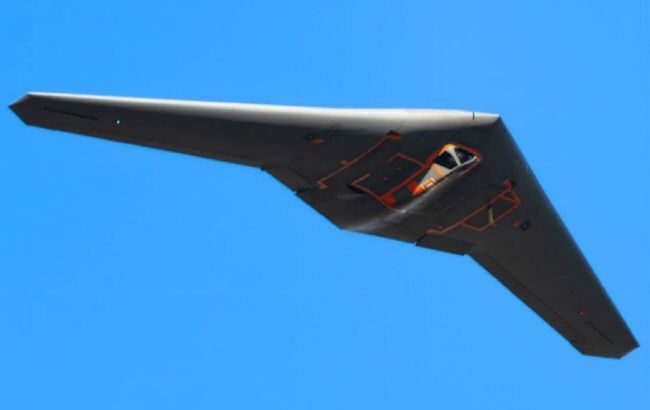 Photo: one of the rare images of the drone (OSINTWarfare)
The United States deployed the classified jet-powered UAV RQ-170 Sentinel to support the special operation to detain Venezuelan leader Nicolas Maduro. Combat use of this drone is a rare occurrence, according to The War Zone (TWZ).
According to available information, at least one, and likely two, RQ-170 Sentinel drones were involved in the mission. At the same time, confirmed cases of the drone’s combat use are extremely rare due to the program’s high level of classification.
An aviation spotter in Puerto Rico recorded video of an RQ-170 returning to Roosevelt Roads Air Base, also known as José Aponte de la Torre Airport. Since September 2025, the facility has been used as one of the key hubs for expanded US military operations in the Caribbean Basin and adjacent regions.
Additional indirect evidence suggesting the possible deployment of the Sentinel over Venezuela emerged in December, when US Air Force Southern Command released photos showing a servicemember wearing a patch depicting the RQ-170. The images were taken at Davis–Monthan Air Force Base, one of the primary US operational centers for Latin America.
The RQ-170 Sentinel has been in service for nearly 19 years, yet most information about it remains classified, including the list of operations in which it has been used. It is known that the drone was developed by Lockheed Martin’s Skunk Works division, entered service in 2007, and was officially acknowledged by the Pentagon only in 2009.
The aircraft features reduced observability across multiple electromagnetic spectra thanks to a special non-metallic coating. Open-source data indicate the RQ-170 uses a flying-wing configuration, with an estimated wingspan of about 12 meters, length of roughly 4.5 meters, and height of around 1.8 meters.
One RQ-170 was previously lost over Iran, after which Iran’s defense industry conducted reverse engineering and unveiled its own derivative drone, the Saegheh-2. Since then, the Sentinel has become somewhat more visible publicly, with more detailed images appearing online, though its tactical and technical characteristics remain classified.
US special operation in Venezuela
In recent days, the US military detained Venezuelan dictator Nicolas Maduro in Caracas, along with his wife Cilia Flores. Both are accused of drug trafficking, including the supply of cocaine and fentanyl to the United States.
However, despite Trump’s long-standing focus on combating narcotics, this is not the only reason for strained relations between Washington and Caracas. Maduro’s predecessor, Hugo Chávez, nationalized oil fields in Venezuela that had belonged to US companies.
Long before the special operation in Caracas, Trump had warned Maduro and called on him to return what he described as "stolen US assets, oil, and land," reportedly even offering him asylum in Türkiye.
Maduro, however, refused to comply with the demands of the White House and, according to Trump, even staged public dances during the escalation of the conflict, a move that Trump described as the final straw leading to the operation.
Maduro is now awaiting a US court verdict, while Trump has tasked US Secretary of State Marco Rubio with overseeing Venezuela. Trump has previously stated that Washington would administer Venezuela to benefit from its economic advantages.