US and Ukraine upgrade S-300 air defense systems as Patriot missile shortage grows

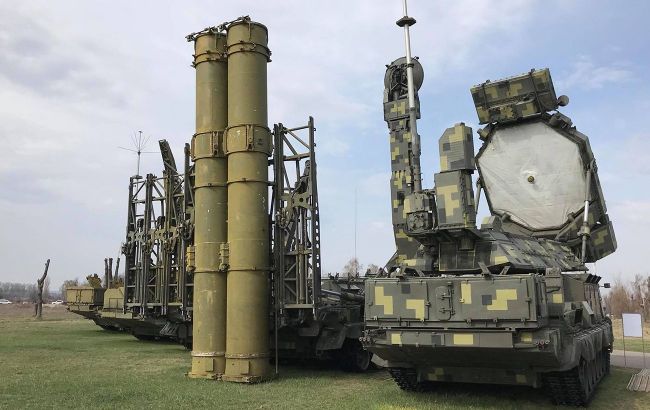 Photo: S-300 (Yurii Biriukov)
Due to the massive expenditure of Patriot missiles in the war between the US and its allies and Iran, Washington can no longer fully supply these systems to Ukraine. One way to partially offset the shortage will be a joint Ukrainian-American project to modernize old S-300 missiles, which is set to begin as early as the end of this year, according to PBS NewsHour.
Catastrophic shortage of Patriot missiles
According to retired US Army Colonel Robert Hamilton, president of the Delphi Global Research Center, the US had approximately 2,330 Patriot missiles before the war, and now there are about 800 left—meaning US stockpiles have been reduced by nearly two-thirds.
The reason is the heavy use of these missiles during the conflict with Iran, particularly to defend allies in the Persian Gulf.
The expert notes that the US currently produces about 600 Patriot missiles per year and is one of three countries manufacturing them under license, along with Germany and Japan. There is a $58 billion contract to ramp up production to 2,000 missiles per year, but the first deliveries under this contract are not expected until early 2029, and the contract will not be fully fulfilled until 2032.
As a result, according to Hamilton, Washington is forced to preserve its existing stockpiles for other theaters of war, the Middle East and the Indo-Pacific region, and is even diverting missiles that have already been purchased and paid for by European partners for its own needs.
Throughout the full-scale war, Ukraine has received only about 600 Patriot missiles, in contrast to its partners in the Persian Gulf, who, according to observations by Ukrainian experts, used four to eight interceptors per ballistic missile, while the Ukrainian military has learned to shoot down targets at a ratio of one-to-one.
Read also:
S-300 and other alternatives: How to plug hole in defense
Hamilton cites a joint US-Ukraine initiative to modernize older S-300 missiles (or a newer variant of the system) with improved capabilities as one of the measures intended to partially offset the shortfall. According to him, this project is expected to get underway toward the end of this year, although the volumes involved are relatively small—a hundred or two missiles per year.
The expert cited the French-Italian SAMP/T system, similar in purpose to the Patriot, as a second avenue: France has already announced its intention to transfer two batteries of this system to Ukraine this year, and in the long term, Paris and Rome plan to increase such deliveries. At the same time, Hamilton emphasizes that all these initiatives are designed to take months and years, not to provide a quick solution to the problem.
He also draws attention to the shortage of long-range strike missiles—the US Army has effectively exhausted its ATACMS stockpiles and has used up nearly half of its PrSM stockpiles. According to him, this places an additional strain on other theaters where the United States may need weapons of this class and increases the risks in the event of simultaneous conflicts in several regions of the world.
Future Patriot production in Ukraine will become one of the primary targets for Russian attacks, although the defense industry has already adapted to operating under constant attack.
The United States is continuing negotiations with Ukraine on the joint production of interceptor missiles for the Patriot air defense system, despite President Donald Trump's doubts about the wisdom of such cooperation.