Unknown drones hit Russian Tolyatti, two chemical plants erupt in flames

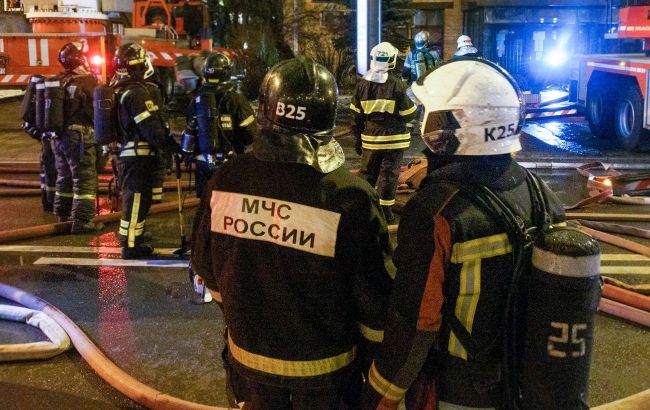 Photo: Russian firefighters (Getty Images)
Russian monitoring channels reported overnight on April 4 about explosions in the Russian city of Tolyatti amid an air raid alert. Local residents said they heard engine noises and explosions in different parts of the city, and similar reports had initially appeared about Taganrog.
Eyewitnesses report low-flying UAVs and the sounds of Russian air defense systems in operation. Temporary restrictions have been introduced at Samara airport on the arrival and departure of aircraft. The local governor stated that the "Kover" ("Carpet") regime has been declared.
There is currently no official information about casualties or damage. However, according to videos published by city residents, the KuibyshevAzot chemical plant may have been hit. One eyewitness says the plant is on fire.
In addition, Russians complain that drones struck the Tolyattikauchuk enterprise. A large-scale fire has broken out at the facility.
However, the night for Russians began with an attack on Taganrog. Residents of the city report explosions, and posts on public channels say there were strikes near the KhozAgro enterprise amid a missile threat.
The Kremlin-opposed agency ASTRA conducted an OSINT analysis and reported that in Tolyatti, following the attack, an area near two chemical enterprises — Tolyattikauchuk and KuibyshevAzot — is on fire.
Tolyattikauchuk is a petrochemical enterprise that produces synthetic rubber and chemical components. These components are used in the production of tires and rubber goods.
KuibyshevAzot is a chemical enterprise that produces nitrogen fertilizers and chemical raw materials (caprolactam, polyamides).
What is known about recent attacks on Russian territory
Thanks to drones operated by the Armed Forces of Ukraine, 40% of the capacity of Russia's Primorsk port on the Baltic Sea has been destroyed. The port is used for oil storage.
In addition, just over the last week of March, Russia's seaborne exports of raw materials collapsed, leading to losses of more than $1 billion in revenue for the Kremlin.