Unbreakable ice: Scientists develop new material stronger than concrete

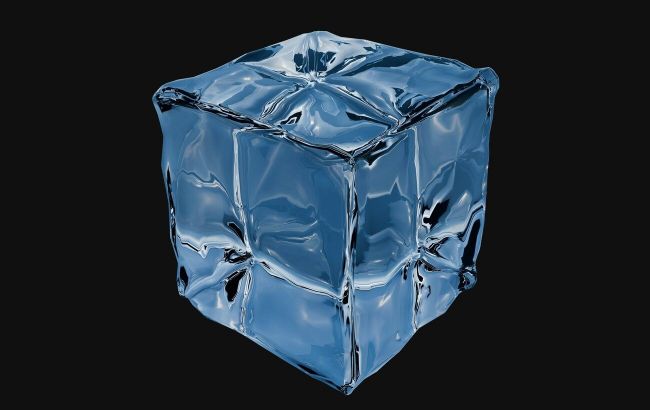 Israeli scientists create BioPykrete ice (photo: Logan Voss)
Scientists have created ice that is 10 times stronger than ordinary ice - the new material, BioPykrete, can withstand loads comparable to concrete. It was developed by a team at the Hebrew University of Jerusalem, according to Interesting Engineering.
The researchers explained that the idea of reinforcing ice is not new. During World War II, researchers experimented with pykrete - a mixture of ice and wood pulp that melted more slowly than regular ice.
A group of scientists led by Professor Ido Braslavsky from the Robert H. Smith Faculty of Agriculture, Food and Environment took this principle to the molecular level.
Molecular glue and plant nanocrystals
To create BioPykrete, scientists mixed ice with cellulose nanocrystals - microscopic rigid particles responsible for the strength of plant structures.
During the freezing process, these particles formed a volumetric three-dimensional network around the ice crystals.
The main technological breakthrough was the creation of a special artificial protein that acts as a molecular glue.
One part of this protein structure binds to the ice, while the other binds to the cellulose. Thanks to such a molecular bridge, the strength and energy absorption indicators doubled compared to ordinary ice and cellulose mixtures.
Read more: AI goes to space: Google launches first orbital test processor
Test results and properties
Laboratory tests showed that BioPykrete resists compression 10 times better than pure ice, achieving the strength of traditional concrete.
Furthermore, the new material is capable of absorbing 70 times more energy before failure.
Unlike ordinary ice, which shatters into shards under pressure, BioPykrete deforms and bends. This makes it significantly safer for potential use in construction.
Prospects for application
Scientists view BioPykrete as an environmentally friendly and biodegradable alternative to building materials for the Arctic and Antarctica.
The reason is that transporting steel and concrete to these regions requires colossal financial and logistical expenses.
Currently, the development remains a concept and requires long-term testing. Researchers still need to determine how BioPykrete behaves during multiple freeze-thaw cycles and whether it maintains its shape under constant long-term pressure.
More interesting:
- 10 dimensions may not exist: AI study at Large Hadron Collider challenges theory
- Europe unveils most powerful spectrograph to capture thousand galaxies at once