AI goes to space: Google launches first orbital test processor

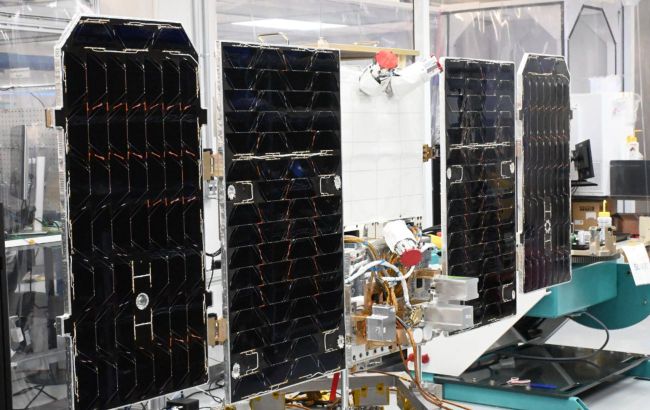 Tech giant plans to test how AI works in space conditions (photo: Planet)
Google will send a micro-data center with artificial intelligence into space—a satellite equipped with four specialized TPU chips is scheduled to launch into orbit on October 1, according to Planet.
Technical parameters of the first space testbed
According to the announcement, the experimental module is not a full-fledged data center in the classical sense, but rather a "minimum configuration test system."
Key characteristics of the MVP satellite:
- Hardware: 4 tensor processing units (TPUs), with combined power equivalent to one standard server.
- Power consumption: Powered by solar panels with a capacity of 1 kW (equivalent to the consumption of a household hair dryer).
- Mission duration: The satellite will process simple AI queries for one year, while the total time in orbit before atmospheric re-entry will be six years.
We’re taking AI to space with @Google.
— Planet (@planet) September 24, 2026
Project Suncatcher explores putting AI compute in orbit, powered by the sun. Soon, we’ll be sending our first satellite into space to start testing that idea. It’s a new approach to AI infrastructure.
Check out a behind-the-scenes look… pic.twitter.com/cup8uXuyrC
Engineering challenges: radiation and cooling
The main obstacle to the functioning of microchips in space is harsh radiation and the lack of convective cooling. Previous system tests were conducted at the Crocker Nuclear Laboratory.
Methods to counteract space factors:
- Protection against bit inversion: Radiation causes distortion of binary code ("bit flips"). The primary method for eliminating such errors at the initial stage will be software rebooting of the chips.
- Heat dissipation system: Patented cooling technology based on conductive materials dissipates heat into a vacuum, but it can operate continuously for only about 15 minutes. After this, the processors require a pause for cooling.
- Threat of cosmic rays: High-energy physical particles can penetrate semiconductor structures and cause physical melting of components.
Prospects and scaling
Google urges the public to refrain from inflated expectations, emphasizing that deploying fully functional space systems will require many years and significant investment.
Planned stages of project development:
- Next launches: In 2027, the company plans to launch two more similar satellites into orbit.
- Creation of an orbital network: The ultimate goal involves forming a group of 80 satellites flying in tight formation for joint processing of AI queries.
- Large-scale modules: The tech giant is considering the concept of creating an orbital platform the size of a football field.
Google has not yet disclosed the exact amount of funding for the project.