UN considers moving humanitarian aid supplies underground amid Russian strikes

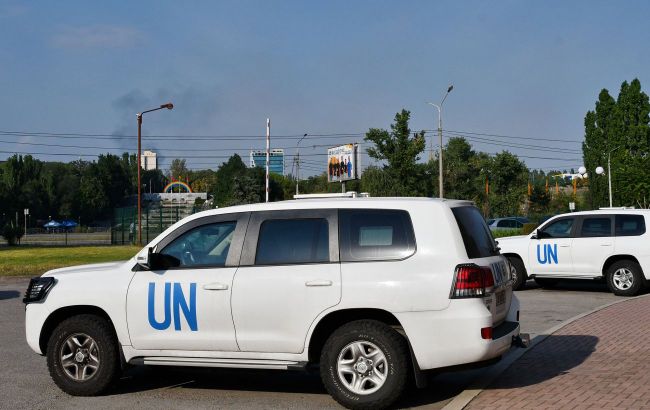 Photo: UN vehicles in Ukraine (Getty Images)
The UN is considering storing humanitarian supplies underground following a series of Russian strikes that have already destroyed 10 of the organization's warehouses this year, Reuters reports.
UN Humanitarian Coordinator in Ukraine Matthias Schmale said the organization is looking for ways to reduce the risk of aid being destroyed in Russian attacks.
According to him, 10 UN warehouses have already been hit this year. The attacks destroyed humanitarian supplies worth millions of dollars.
Russia targets aid warehouses
One of the main warehouses of the World Health Organization, where medical supplies were stored, was hit in early September.
Other Russian strikes destroyed hygiene kits and school supplies intended for children.
Schmale described the attacks on warehouse facilities as a new trend in recent months. He said this was forcing humanitarian organizations to reconsider how they store and deliver aid.
"These deliberate attacks on warehousing capacities (...) is a new trend of the last few months," the UN coordinator said.
Aid could be moved underground
One option currently being considered by the UN is moving supplies to underground bunkers. The organization is also trying to avoid purchasing large volumes of humanitarian aid too far in advance of delivery.
According to Schmale, procurement is to be carried out as close as possible to the time when the supplies will be needed on the ground. This should reduce the amount of time they spend in warehouses and, consequently, the risk of them being hit by Russian strikes.
"This feels increasingly like the front line is moving into the air," the UN official said.
He added that the situation creates an additional financial burden. This includes not only the direct cost of destroyed supplies, but also expenses related to protecting staff and humanitarian infrastructure itself.
According to Schmale, these additional costs were not included in the UN's humanitarian aid budget for Ukraine, which amounts to $2.3 billion for 2026.
Earlier, the UN warned of the "toughest winter" for Ukraine since the start of the full-scale war. Russian strikes on the energy sector could leave people without electricity, heating and water, potentially causing a humanitarian catastrophe amid low temperatures.
In addition, the UN acknowledged that Russian attacks on ports and ships threaten global food security.