Ukrainian partisans reveal how Russia delivers ammo to Northern front

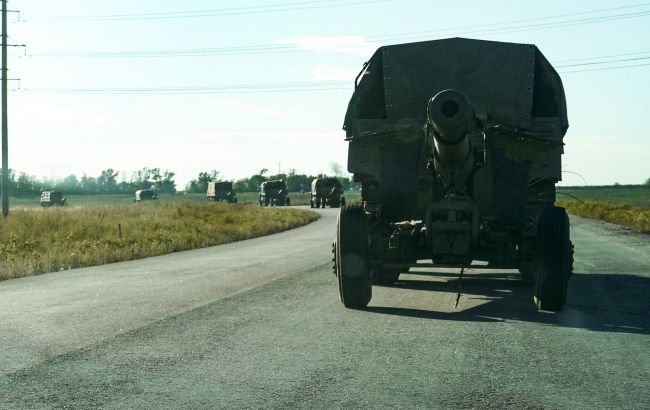 Column of Russian military vehicles (photo: Getty Images)
Underground agents recorded the transfer of ammunition from Russia's Volgograd region to the borders of Sumy and Kharkiv regions due to the Russian forces' negligence, the Atesh movement reports.
Partisans continue to monitor the enemy's strategic military transport across a railway bridge in Russia's Volgograd region, in the Mikhailovsky district. Agents recorded the arrival of another shipment of ammunition for the North group of forces.
After unloading at the railway station, the cargo was distributed among five Ural trucks.
Atesh believes that, based on the markings on the equipment and the convoy's westward movement along the R-22 Caspian highway, the priority destinations for these shells are the Belgorod and Kursk regions. Such a logistics route indicates that Russian forces are preparing to intensify attacks on Ukraine's border areas.
Atesh reports that the purpose of the shipment is to intensify fighting in the Sumy and Kharkiv directions.
It is also known that during the transportation of the explosive cargo, the crews made a stop at a civilian parking area, leaving vehicles loaded with ammunition next to civilian drivers. While the trucks carrying combat supplies were left unattended, the drivers consumed alcohol at a local café called Veronichka.
Underground agents stated that they are fully tracking the supply route, from the bridge to specific trucks. The exact coordinates of the crews have already been passed on to the relevant recipients.
It is recalled that this is not the first successful operation by the underground movement in the Bryansk region. Earlier, an agent of the Atesh movement carried out sabotage in the industrial zone of the Volodarsky district, disabling equipment at a local electrical substation.
This facility is a critically important link in Russian military logistics, as it supplies power to the Polpinskaya railway station. It is through this hub that the main trains carrying equipment and ammunition to the front pass.
The power outage at the substation disrupted railway automation and caused severe delays in the delivery of weapons to Russian forces.