Ukrainian official explains how NATO changing in response to Russian threat


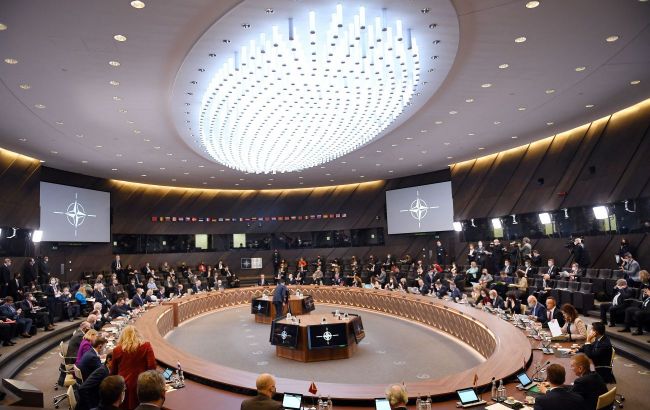 Illustrative photo: NATO is changing in response to the Russian threat (Getty Images)
According to the diplomat, NATO is currently undergoing many transformational processes, most of which take into account the experience of the Russia-Ukraine war. This practical experience is already being incorporated into the Alliance's doctrines, defense planning and new initiatives.
One of the most important lessons of the war has been a significant shortening of the decision-making cycle. NATO aims to make the "intelligence-decision-strike-assessment" chain as short and effective as possible.
Getmanchuk also sought to dispel the myth that NATO remains an unwieldy bureaucratic structure. She stressed that in the event of a real threat, the response would be immediate.
"If some Ukrainians think NATO is such an unwieldy structure that can take a long time to get organized, convene the North Atlantic Council and decide what to do about a drone — no, that's not the case at all. Before any meeting takes place, those drones will effectively already have been shot down," the head of the mission explained.
NATO 3.0 concept and shifting responsibility
According to Getmanchuk, the Alliance is increasingly aware that alongside a prolonged political and diplomatic confrontation with Russia, there could also be a direct military confrontation. At the same time, the boundaries between these forms of confrontation are becoming increasingly blurred.
Against the backdrop of these threats, NATO is undergoing two key processes. The first is a shift in the transatlantic burden of responsibility from the US to Europe under the NATO 3.0 concept. It envisages that Europeans themselves should bear primary responsibility for conventional security on the continent, while Washington will retain leadership in nuclear deterrence.
The second process concerns a more equal distribution of the financial burden among European NATO member states and Canada.
"This is something we also feel when it comes to support for Ukraine. We see the same countries providing us with assistance in virtually every possible format. And, of course, some of them don't like it. They would like this financial burden to be distributed more or less evenly," Getmanchuk said.
She added that NATO's military command and European countries are now looking for ways, within the NATO Force Model, to replace certain US capabilities with their own resources.
Getmanchuk previously said that the Ukraine Defense Contact Group format and the PURL program would focus through the end of 2026 on financing defense packages that have already been approved by the US.
In addition, the head of Ukraine's mission said that NATO's recognition of Ukraine as a security contributor at the declaration level shows that the Alliance has recognized the potential of Ukraine's capabilities to strengthen the organization.