Ukraine wants to change main condition for receiving new IMF loan

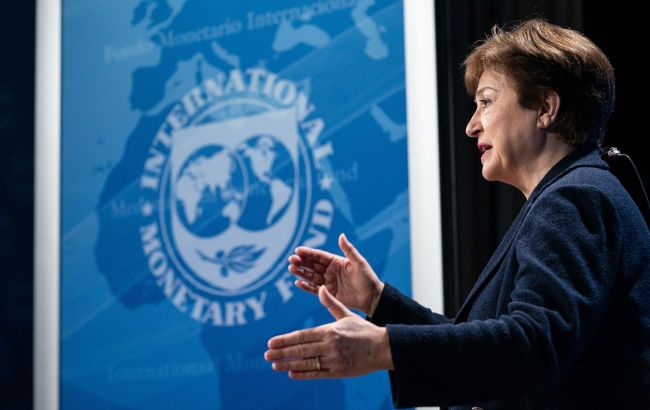 Illustrative photo: Ukraine seeks to change the main condition for receiving a new IMF loan (flickr.com/imfphoto.jpg)
Ukraine is seeking to soften an unpopular tax law demanded by the International Monetary Fund as a condition for receiving more than $8 billion under a financing program, Bloomberg reports.
IMF position and resistance within the government
Ukraine’s Finance Ministry is finalizing a draft bill to raise taxes for businesses, one of the IMF’s key conditions for continuing its financing program.
However, according to the outlet’s sources, President Volodymyr Zelenskyy, Prime Minister Yulia Svyrydenko, and a significant number of members of parliament oppose the proposed changes.
Initially, the Finance Ministry planned to introduce a value-added tax for self-employed entrepreneurs with annual income exceeding 1 million hryvnias. This form of activity is widely used by Ukrainian businesses, including as a way to optimize the tax burden.
Although Kyiv initially agreed to these conditions, sharp public criticism forced the authorities to reconsider their approach.
According to one source, President Zelenskyy personally expressed dissatisfaction to Finance Minister Serhii Marchenko over agreeing to the unpopular demands. Marchenko declined to comment on the situation.
Softening of the bill
The Finance Ministry is currently considering options to soften the bill — in particular, raising the revenue threshold for mandatory VAT payments to 2 million or 4 million hryvnias.
As Bloomberg reported, Servant of the People faction leader Davyd Arakhamia said the authorities are leaning toward raising the threshold to 4 million hryvnias.
According to him, he is taking part in the negotiations as the head of the largest faction in the Verkhovna Rada (the parliament). Submission of the bill to the Cabinet of Ministers, which had been planned for last month, was postponed until around February 10.
Even in its softened form, the bill is likely to remain unpopular among the public and businesses exhausted by the war. The situation has been further complicated by severe frosts in recent weeks, which have increased costs for entrepreneurs, many of whom have been forced to use generators due to problems with energy supplies.
Further negotiations
At the same time, according to sources, the IMF is showing greater flexibility in the talks as it seeks to preserve the support program. Last month, IMF Managing Director Kristalina Georgieva visited Kyiv, which is being seen as a signal of political backing.
This opens the door to broader bargaining, including a possible revision of rules governing oversight of so-called politically exposed persons (PEPs). According to Arakhamia, the Ukrainian authorities are raising this issue during closed-door meetings with the IMF.
New IMF loan for Ukraine
As reported, in November 2025, Ukraine and the IMF reached a preliminary agreement to launch a new four-year financing program worth $8.1 billion.
At the same time, access to the funds depends on meeting a number of conditions. Ukraine has already fulfilled one of them — the Verkhovna Rada has adopted the state budget for 2026.
Among the other IMF requirements is the introduction of a value-added tax for individual entrepreneurs with annual income exceeding 1 million hryvnias.
This provision has drawn criticism. Experts warn it could fuel the growth of the shadow economy, while the income threshold is seen as too low and in need of revision.
As a result, Ukraine has not yet confirmed its readiness to meet all the program’s conditions, including those related to VAT for sole proprietors.
Against this backdrop, IMF chief Kristalina Georgieva said during her visit to Kyiv in January that the Fund could give Ukraine up to one year to adopt the necessary changes related to this tax.