Ukraine shares Russian strike data to help upgrade Patriot PAC-3 missiles

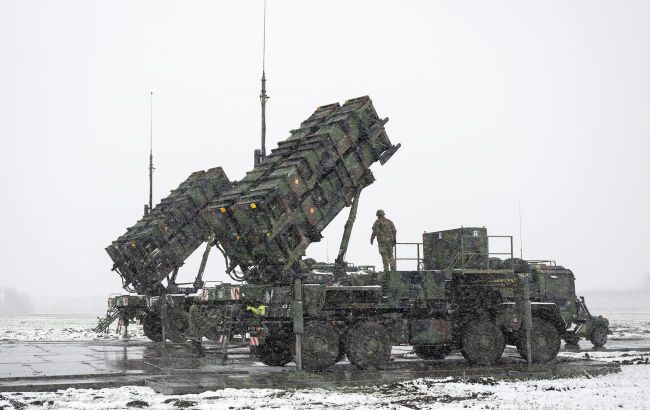 Photo: Ukraine shares data on Russian strikes with Patriot manufacturers (Getty Images)
Ukraine is providing information on Russian strikes to American Patriot missile manufacturers to help improve PAC-3 interceptor missiles, Yegor Chernev, deputy head of the Verkhovna Rada Committee on National Security, Defense, and Intelligence, said in an interview with Business Insider.
Read also: Ballistic missile killers: What makes PAC-3 interceptors promised to Ukraine so important
Chernev said Russia is constantly changing its attack tactics — combining ballistic and cruise missiles, using decoys, and adjusting flight trajectories. Ukraine is passing this data to Lockheed Martin, which produces PAC-3 missiles for the Patriot system.
“They (the Russians) are trying to use different tactics and make some adjustments for their ballistic missiles,” Chernev noted.
Lockheed Martin declined to comment on the activities of foreign militaries but confirmed that it is ramping up production of Patriot interceptors and accelerating upgrades to counter emerging threats.
Chernev described the situation as a “technology race,” emphasizing that Ukraine and Russia are both seeking technological advantages on and off the battlefield.
What is known about PAC-3
PAC-3 (Patriot Advanced Capability-3) is a modern American interceptor missile for the Patriot air defense system, developed by Lockheed Martin.
It is primarily designed to destroy short- and medium-range ballistic missiles but can also intercept cruise missiles, aircraft, and drones.
Its key feature is the “hit-to-kill” principle — the missile destroys its target through direct kinetic impact rather than using an explosive warhead. This approach ensures high precision and reduces the risk of debris dispersal.
The interception range is approximately 35–45 kilometers, depending on the variant, with an altitude of up to about 20 kilometers. The improved PAC-3 MSE version offers greater range and enhanced maneuverability.
Unlike the earlier PAC-2 version, which used a fragmentation warhead, PAC-3 is more compact, allowing more missiles to be loaded onto a single launcher.
This increases the system’s ability to repel large-scale attacks. PAC-3 missiles are specifically used to counter modern missile threats, particularly ballistic missiles.
Recently, German Defense Minister Boris Pistorius said after the Ramstein meeting that Ukraine could receive 35 PAC-3 missiles for Patriot systems.
Earlier, Western media reported that due to a critical shortage of PAC-3 interceptors, some Ukrainian Patriot launchers remained empty last month, allowing Russian ballistic missiles to strike power plants without interception.
For more details on what makes the PAC-3 missiles promised to Ukraine by Germany so special, read the article by RBC-Ukraine.