Ukraine’s 'kinetic sanctions' neutralize Russia’s profits from fuel crisis - Official


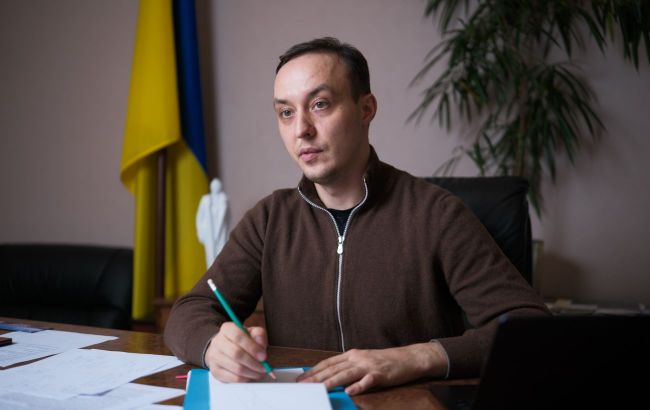 Photo: Presidential Commissioner for Sanctions Policy of Ukraine, Vladyslav Vlasyuk (Vitalii Nosach, RBC-Ukraine)
Ukrainian drone strikes on Russia — described as "kinetic sanctions" — have effectively neutralized everything Russia could have earned from the fuel crisis triggered by the US operation against Iran, states the Presidential Commissioner for Sanctions Policy, Vladyslav Vlasyuk, during a meeting with journalists on April 10.
According to Vladyslav Vlasyuk, sanctions on Russian oil have been the biggest topic of recent weeks. He said Ukrainian Defense Forces’ strikes on Russian oil infrastructure — "kinetic sanctions" — have effectively offset everything Russia could have earned from rising oil prices and any weakening of sanctions.
"Through 'kinetic sanctions,' we are now seeing about $1.7 billion in unrealized revenues — money Russia did not earn due to its inability to technically export a certain volume of oil from two Baltic ports and Novorossiysk," Vlasyuk explained.
He noted that Russia has only been able to earn revenue from oil already at sea. Thanks to a temporary easing of sanctions, it managed to sell most of it to India, generating roughly the same amount it lost elsewhere.
As a result, in February — which marked a record low for Russia — the Kremlin earned about $9 billion from oil sales. Preliminary estimates for March range from $12 to $14 billion. For Ukraine, this is worse than February’s figures but still better than October 2025 levels, when Russia was earning $15–17 billion per month.
"Overall, we are managing to restrain Russia’s oil and gas revenues. Over three months, they have exceeded the annual budget deficit plan — which is good news — and all the other structural changes, crises, or problems in the Russian economy remain in place," Vlasyuk said.
Not a lifeline
At the same time, strategically, Russia’s earnings from the fuel crisis will not save it. While it allows them to generate additional funds that can be redirected to military spending, structurally, the economic problems remain severe.
"We hope that the Strait of Hormuz will indeed be unblocked, and the impact of sanctions will return to the level it was at the end of February," added Vladyslav Vlasyuk.
He also noted that the easing of sanctions on Russian oil has had no meaningful impact on the global oil market, as expected. Russian exports, even in the best periods, account for only about 6% of global seaborne oil.
"Thirty percent passes through Hormuz. It was impossible for those 6% at most to significantly solve the problem of losing 30%," Vlasyuk said.
Regarding US actions, he said it is still unclear why Washington decided to ease sanctions. Ukraine hopes that once the strait is unblocked, sanctions on Russian oil will not only be restored but further strengthened.
Shadow fleet – next target?
Following strikes on Russian oil export ports on April 3–4, no tankers entered those facilities at all. The ports are now gradually resuming operations — for example, in Primorsk, an average of two tankers per day are being loaded. Ukraine is expected to adjust this situation soon.
At the same time, nothing has been happening at the port of Ust-Luga since April 1, meaning the port has been effectively taken out of service and is currently non-functional.
"Everything we can reach in Russia is becoming a risk zone. I would also say that shadow fleet tankers could also be at risk. I would not rule that out," said Vladyslav Vlasyuk, hinting at possible future developments.
Strikes on Russian oil infrastructure
Ukrainian attacks on Russia’s oil industry have reached such a scale that even Western partners have reportedly asked Ukraine to stop striking Russian oil terminals. However, Kyiv continues to act in its own national interest.
A series of strikes on Russian Baltic oil terminals has already cost the Kremlin nearly $1 billion in lost export revenue alone, while the Baltic ports are currently unable to fully receive and load oil onto tankers.
Several major Russian oil refineries have also been forced to shut down due to drone attacks, including on April 5, when the Nizhny Novgorod Oil Refinery — Russia’s fourth-largest refinery — halted operations.
The Russian oil terminal Sheskharis in Novorossiysk has also suspended operations indefinitely after Ukrainian strikes. On the night of April 5, drones attacked Novorossiysk, with videos circulating online showing fires at Sheskharis and reports of explosions.