Ukraine's intelligence exposes Russian institutes developing missiles and drones

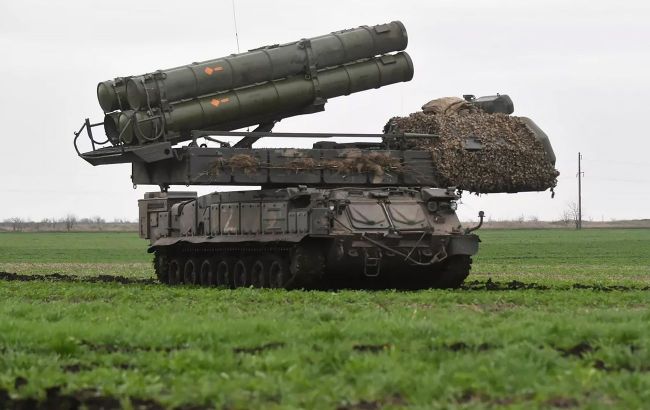 Photo: Ukraine's Defense Intelligence identified Russian scientific institutions developing missiles and drones (Getty Images)
Ukraine's Defense Intelligence (HUR) has identified Russian academic institutions working for the country's defense industry, including those involved in developing missiles and advanced unmanned aerial vehicles, according to Ukraine's intelligence.
Analysts identified Russian higher education institutions that train personnel for the Russian military-industrial complex, have cooperation agreements with weapons manufacturers, train UAV operators for the Russian Armed Forces, and conduct research and development in military and dual-use technologies.
In particular, Skoltech is developing anti-icing coatings for UAVs and technologies for manufacturing turbine blades for aircraft engines. The Moscow Institute of Physics and Technology is involved in developing computer vision systems in partnership with the High-Precision Systems holding, part of the state-owned Rostec corporation.
Chuvash State University named after I.N. Ulyanov is training engineering and technical specialists for VNIIR-Progress, a manufacturer of Kometa anti-jamming navigation modules used in Russian missiles and drones. The university is also carrying out joint research, development, and innovation projects with the company.
The results of this cooperation are subsequently used to advance Russia's military technologies. The main beneficiary during the war is the Russian military-industrial complex. These technologies include machine vision systems for attack drones, propellers for military aircraft, and integrated circuits for onboard cruise missile systems, among others.
Earlier, RBC-Ukraine reported that Russian jet-powered drones can cover considerable distances and reach Ukraine's western regions. Their range depends on technical specifications, fuel capacity, and onboard equipment.
In addition, Russia has significantly upgraded its Gerbera drones, which can now travel up to 1,200 kilometers and carry larger payloads.