Ukraine's frontline 'kill zone' expands to 20 km as troops face longer journeys on foot


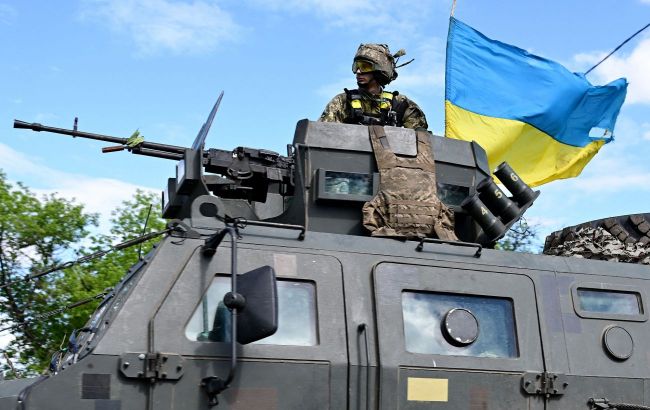 Armored vehicles in Ukraine (photo: Getty Images)
On the most active sections of the front, the 'kill zone' — an area that soldiers are forced to cross on foot while under enemy fire — has reached at least 15 kilometers, while an area extending up to 20 kilometers in depth has become logistically difficult, 107th Territorial Defense Brigade commander Denys Perch said in an interview with RBC-Ukraine.
'Kill zone' has expanded to 15–20 kilometers
According to Perch, the width of the dangerous zone varies significantly across different sections of the front, but the trend is the same everywhere — it is constantly expanding. On the most active directions, soldiers have to walk more than 15 kilometers to reach their positions, while units now need logistical support at distances of 15–20 kilometers. In some areas, the journey to positions takes up to three days.
The brigade commander noted that until recently, some positions could be reached by pickup truck. At first, the distance that had to be covered on foot was two kilometers, then it gradually increased to three, five, and ten kilometers, and now pickup trucks cannot even reach the approach points.
According to his observations, some commanders use repetitive tactics, do not look at what is happening on other sections of the front, and "step on the same rake," being unprepared for changes.
Perch also noted that the enemy acts in a centralized and formulaic manner, so experience gained on some sections of the front generally makes it possible to predict what to expect on others.
Fiber-optic drones are the main unresolved problem
The brigade commander explained that both fiber-optic drones and drones using digital channels cause serious damage. The military has already learned how to counter drones using digital channels — they can be jammed by disrupting their control or video signal.
This approach does not work with fiber-optic drones: it is currently impossible to interfere with their control or video feed.
According to Perch, some engineering teams have made certain developments aimed at countering such drones, but it is not yet known whether they will prove effective directly on the battlefield.
At the same time, ground robotic systems are increasingly replacing armored vehicles on the most dangerous sections of the front. Constant battlefield surveillance and the widespread use of inexpensive drones have made large armored vehicles highly visible, vulnerable, and costly targets.
Frontline logistics are changing as a result. Ammunition delivery, casualty evacuation, and other missions in high-risk areas are increasingly being transferred from armored vehicles and conventional pickup trucks to unmanned ground systems, reducing the need to expose personnel and larger vehicles in drone-dominated zones.