Ukraine's 3rd Corps makes history by dropping combat robots behind Russian lines


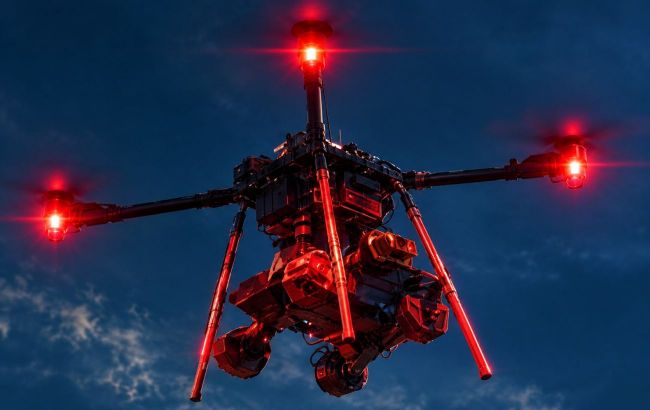 Photo: Screenshot from a video (Third Corps)
For the first time in history, the Third Army Corps of the Ukrainian Armed Forces employed the tactic of airdropping unmanned ground vehicles (UGVs) from Griffon heavy bombers. During Operation Vivaldi, Russian troops were attacked by kamikaze UGV units dropped over 10 kilometers deep into Russian rear areas.
Technological breakthrough unprecedented anywhere in the world
The commander of the NC13 ground strike complex unit, part of the Third Separate Assault Brigade of the Third Army Corps, with the call sign Makar, says that troops have been using the system for dropping UGVs from drones for about four to five months. According to him, prior to this, no unit in the world had ever airdropped ground robots—let alone done so systematically on the battlefield.
This tactic is viewed as part of sabotage operations aimed at destroying the enemy deep in the rear and in hiding places, capturing enemy pilots, and disrupting logistics. Ground robots have already been used to capture prisoners, as well as to hold positions for 45 days while equipped with a mounted machine gun.
According to Makar, the unit spent a considerable amount of time developing the system: they had to figure out how to mount the UGV to the drone, how the aircraft would behave in the air, what ammunition to equip it with, how to maintain communication and plan missions—as well as how to conceal the exact source of the strike from the enemy for as long as possible.
First attempt failed, but second was successful
The NC13 fighters carried out their first UGV drop operation together with the Unmanned Systems Battalion of the Third Assault Brigade: the pilots delivered and dropped 2 drones 15 kilometers from the front line.
The drop was successful, but the unit chose an inopportune time to carry out the mission—Russia detected the movement and opened fire, destroying both drones.
That same day, the fighters dropped 2 more UGVs in the same area, having learned from their previous mistakes. The second group managed to reach the designated target, a staging area where Russian troops were stopping to regroup and rest, and destroy it. According to Makar, the success of the second attempt made it possible to systematize the approach and begin regularly applying the tactic at distances of up to 15 kilometers behind Russian lines.
Conceptually, the unit had arrived at the idea of airdropping as early as November 2025, when it reached the level of a strike brigade equipped with UGVs. At that time, the commander tasked engineers with developing a device adapted for transport and deployment from a drone.
Effectiveness and psychological impact on Russia
According to the commander, the success rate of UGV deployment operations is about 80% thanks to coordination among all units involved—from the workshop and planning team to the operators on duty.
In addition to combat missions, the robots are also used for free hunting along Russian logistics routes. According to Makar, in one operation, a single UGV took out 2 Russian soldiers and wounded 4 more.
According to the unit's observations, such actions cause panic among the Russians and force the Russian command to ban movement along certain routes and put their positions on full combat alert. In one instance, Makar reports, the elimination of a single Russian soldier by a ground robot led to the cancellation of a planned mechanized assault.
The commander of NC13 appealed to the commanders of other battalions and brigades to expand the use of ground-based robotic systems, emphasizing that robotics helps save the lives of personnel.
Why bombers were named Griffon
The bombers' name is linked to the call sign of NC13 machine gunner Hryhorii Bakh, Griffon, who went missing in action during the battles for Andriivka in 2023, when the unit was still an assault platoon within the Second Assault Battalion. According to Makar, every such operation honors a comrade and avenges him.
Meanwhile, other countries are also actively developing ground-based robotic systems: Croatian manufacturer Rheinmetall Unmanned Vehicles conducted field tests of the heavy MV-8 Komodo unmanned ground vehicle, which has been trained to guide bridge crossings for the passage of military equipment remotely, and also tested an autonomous control package that allows the robot to navigate a route independently and avoid obstacles.