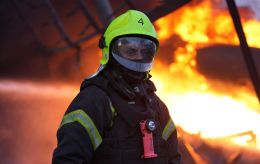
Ukraine reports sharp increase in Russian chemical attacks on frontline

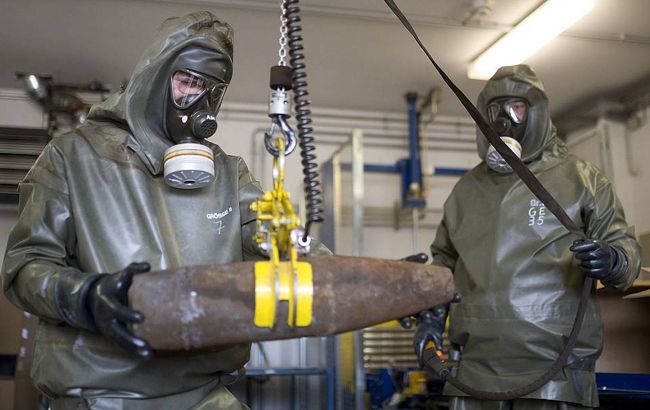 Illustrative photo: The intensity of Russia’s chemical attacks on the frontline has sharply increased (Getty Images)
Since the beginning of the full-scale invasion of Ukraine, more than 13,300 cases of Russian occupying forces using chemical munitions on the battlefield have been officially recorded, states Colonel Valerii Veber, Deputy Head of the Main Directorate for Mine Action, Civil Protection, and Environmental Safety.
According to the Ministry of Defense, while the use of such weapons in 2023 was mostly sporadic, the intensity of the attacks has increased sharply since 2024.
As of the first half of 2026, the overall level of the enemy’s use of chemical munitions remains consistently high along the entire frontline.
Given the ongoing threats posed by Russia, Ukraine called on its partners to strengthen support in the field of chemical, biological, radiological, and nuclear security.
In particular, Veber presented several important project proposals to foreign colleagues:
- Strengthening capabilities in radiation monitoring and response to radiation threats.
- Safe handling of spent sources of ionizing radiation.
- Improving environmental safety at military facilities of the Ministry of Defense.
The G7 countries are currently reviewing the proposed projects in order to allocate additional funding and technical assistance to Ukraine’s Defense Forces.
Russia uses chemical weapons on the frontline
In July last year, it became known that the Security Service of Ukraine (SBU) had documented more than 10,000 cases of Russian forces using chemical weapons against Ukraine’s Defense Forces since the start of the full-scale war.
Law enforcement officials found that Russian units systematically used aerosol grenades containing toxic CS and CN substances, as well as chloropicrin ampoules, to force Ukrainian soldiers out of their positions and into enemy fire.
At that time, the highest number of such incidents was recorded in the eastern direction, as well as during strikes on the Nikopol district of the Dnipropetrovsk region.
In May 2025, the EU imposed sanctions on Russia for the use of chemical weapons in Ukraine, but the attacks did not stop.