Ukraine pushes to join EU by 2028: Brussels assesses progress and sets conditions

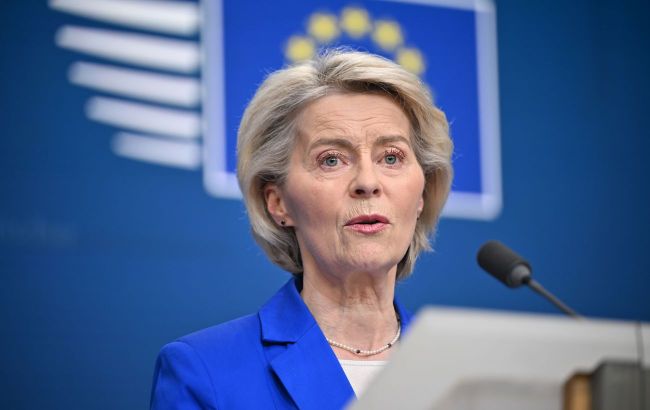 Photo: Ursula von der Leyen (Getty Images)
The European Commission reveals a report on Ukraine's progress toward EU membership, noting significant reforms despite the war and the fulfillment of the conditions for opening three negotiation clusters.
The document notes that Ukraine has successfully completed the legislative screening process and fulfilled the conditions for opening negotiations in three of the six negotiation clusters—Fundamentals, Internal Market, and External Relations.
Kyiv has already adopted key roadmaps in the areas of the rule of law, public administration, and the functioning of democratic institutions.
The European Commission also gives a separate positive assessment of the action plan on the protection of the rights of national minorities. It is expected that the Ukrainian side will soon fulfill the conditions for opening the remaining three clusters as well.
Key achievements and reform milestones
Despite Russia's full-scale invasion, democratic institutions in Ukraine continue to function steadily: parliament continues to pass necessary laws, oversight of the government has been strengthened, and live broadcasts of Verkhovna Rada sessions are once again open to the public.
Significant progress has been made in the judicial and anti-corruption spheres. In particular, a roadmap for e-justice has been adopted, and the National Anti-Corruption Bureau of Ukraine (NABU), the Specialized Anti-Corruption Prosecutor's Office (SAPO), and the High Anti-Corruption Court (HACC) continue to operate effectively following the rapid restoration of their independence with the support of partners.
The European Commission also notes positively:
- Macroeconomic stability, the resilience of the banking system, and economic growth
- Progress in the digitization of public services, public administration, and budget planning
- Reforms in the fields of education, science, culture, and the environment (in particular, the law on climate policy aimed at achieving carbon neutrality by 2050)
- High degree of alignment between Ukraine's foreign and security policies and the positions of the European Union.
Areas requiring further efforts
The European Commission emphasizes that some of last year's recommendations have been implemented only partially and therefore remain relevant. This applies primarily to fundamental rights, the judicial system, and the fight against corruption.
Ukraine must expedite the vetting and appointment of judges, as well as fill vacancies in the Constitutional Court without delay.
In addition, it is necessary to adopt amendments to ensure a more objective and transparent process for the selection and dismissal of the Prosecutor General, as well as to strengthen anti-corruption bodies and expand the jurisdiction of NABU.
Particular attention was drawn to the situation regarding the parliamentary opposition. The report notes that opposition lawmakers continue to face restrictions (particularly regarding travel abroad or the freezing of assets), while relevant legislative initiatives to regulate the rights of the opposition have yet to be developed.
Timeline and ambitions for accession
The report notes that the Ukrainian government has set a goal of concluding accession negotiations across all clusters by the end of 2028.
The European Commission fully supports this ambition but emphasizes that achieving it will require Ukraine to significantly and rapidly accelerate the pace of reforms, particularly in the areas of the rule of law and the fight against corruption.
Currently, the European Union has opened four of the six negotiation clusters related to Ukraine's accession to the bloc. At the same time, Hungary continues to block the opening of the other two.
Last week, Ukrainian Foreign Ministry spokesperson Heorhii Tykhyi announced that Ukraine and Hungary would launch an intergovernmental commission in November. In particular, the commission will address issues of economic cooperation and the protection of the rights of national minorities.