Ukraine needs frozen Russian assets as war damage tops $600 billion


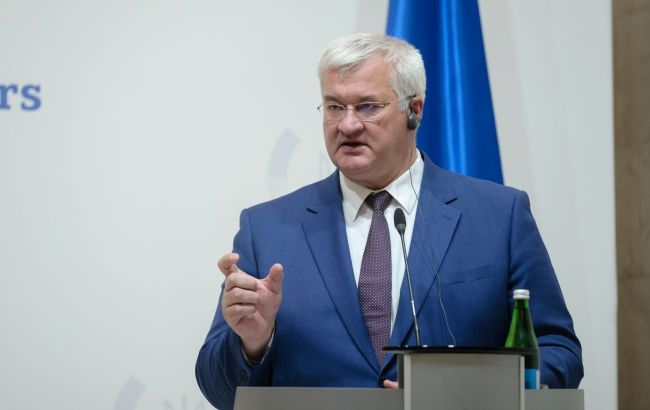 Photo: Acting Foreign Minister Andrii Sybiha (Vitalii Nosach, RBC-Ukraine)
Russia's frozen assets could be a lifeline for Ukraine. This issue cannot be put off, says Andrii Sybiha, Ukraine's acting Foreign Minister.
Why Ukraine cannot overcome damage caused by Russia on its own
"That's true. After all, according to World Bank estimates, as of today, the damage inflicted by Russia on Ukrainian infrastructure amounts to over $600 billion. It's difficult for a single country to overcome that. And what's more, this war isn't about Ukraine," Sybiha says.
Price Ukraine paying for Europe's freedom
According to the diplomat, Ukraine is currently holding the line and defending the freedom of all of Europe, paying the ultimate price for it—the lives of its soldiers. He emphasizes that the country needs support from its partners to ensure resilience and macrofinancial stability, for which Kyiv is grateful.
Sybiha also notes that Belgium is one of the leaders in providing such support.
What frozen assets means for Ukraine
"Frozen assets are one of the fundamental avenues that can significantly strengthen us through the direct use of Russian funds. Therefore, we, as Ukraine, will actively discuss this in European capitals—and not only in European capitals. And we very much hope to reach clear, concrete decisions. This must be a collective decision and a collective responsibility," Sybiha says.
The diplomat adds that Kyiv will discuss this issue not only with European partners but also more broadly.
Russia's frozen assets
In December 2025, Manfred Weber, president of the European People's Party, stated that the EU would eventually use Russia's frozen assets to cover Ukraine's military expenses, even though leaders were unable to reach an agreement at the summit.
At that time, Belgium, which holds the majority of the frozen assets, refused to use them to support Kyiv; instead, EU countries agreed to provide Ukraine with a 90-billion-euro loan.
Meanwhile, in August 2026, it became known that former high-ranking officials from Germany, France, and the United States had proposed transferring Russia's frozen assets to the management of a new European Union entity.
According to them, this would protect the funds from potential influence by both the Kremlin and US President Donald Trump.