Ukraine faces grain export crisis as Poland and Romania reject more transit

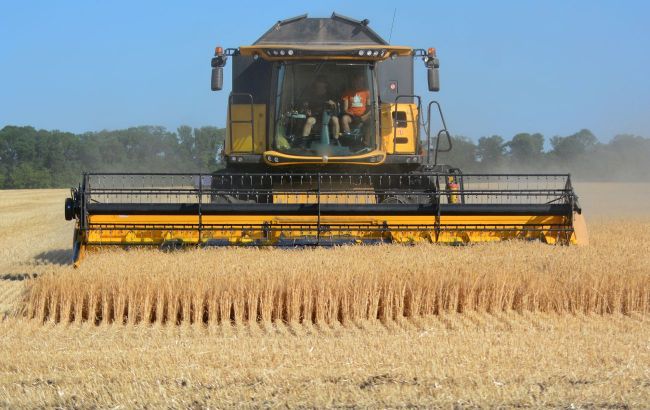 Photo: A combine harvester gathers wheat (Getty Images)
Ukraine is asking the EU to help increase grain exports through Europe, but Poland and Romania are not prepared to expand transit because of their own capacity constraints, according to Politico.
Concerns among European farmers are increasingly influencing EU countries’ decisions on Ukrainian grain. At the same time, the blockade of the Black Sea is creating serious export problems for Ukraine and could even affect next year’s harvest.
Ukraine needs to export millions of tons of grain as Russian attacks on ports and vessels have continued for a third consecutive month.
This week, Ukrainian Agriculture Minister Taras Vysotskyi traveled to Brussels. He called on EU countries to increase capacity for transporting Ukrainian agricultural products through Europe and also asked for 1.1 billion euros to cover additional transportation costs.
According to Vysotskyi, Ukrainian farmers are already facing a severe shortage of funds. If they cannot sell the harvest they have gathered, they will struggle to finance planting for the next season.
“It's very, very critical,” the minister said.
Poland and Romania are not ready to increase transit
Countries with key infrastructure for transporting and storing grain are not prepared to significantly expand its use for Ukrainian exports.
Romania says the interests of its own farmers remain a priority. Romanian Agriculture Minister Barna Tánczos said that the combination of large volumes of Ukrainian grain and low water levels on the Danube is already putting additional pressure on Romanian ports.
As a result, he said, Romanian farmers are facing difficulties selling their own products.
At the same time, Bucharest is trying to improve logistics. Last month, Romania signed a memorandum with Ukraine aimed at simplifying border crossings and strengthening rail connections.
However, Tánczos said the country physically cannot double the number of trains or the capacity of its road and rail routes and ports.
“It is what it is,” the Romanian minister added.
Poland also does not plan to increase the transit of Ukrainian agricultural products. Polish Infrastructure Ministry spokeswoman Anna Szumańska said the ministry “does not intend to make any changes aimed at increasing the transit of Ukrainian agricultural products.”
Ukrainian grain could remain in the country
According to Vysotskyi’s estimate, less than half of Ukraine’s exports can currently be transported through European rail, road and river routes.
If the export problems persist, up to 35 million tons of grain could remain in Ukraine this year.
This would create a problem not only for the current harvest. Unsold grain and oilseeds would accumulate, while farmers would not receive the money they need to plant winter crops.
Vysotskyi warned that if the situation does not change by spring, the area planted with crops could shrink by 35% to 40%.
As previously reported, Türkiye and the United Nations are trying to negotiate a new ceasefire in the Black Sea aimed at guaranteeing the safety of shipping and protecting Ukrainian grain exports.
The talks are expected to take place in early October. Representatives of the Swiss Centre for Humanitarian Dialogue could serve as mediators.