Ukraine exposes how Russia still gets around EU sanctions


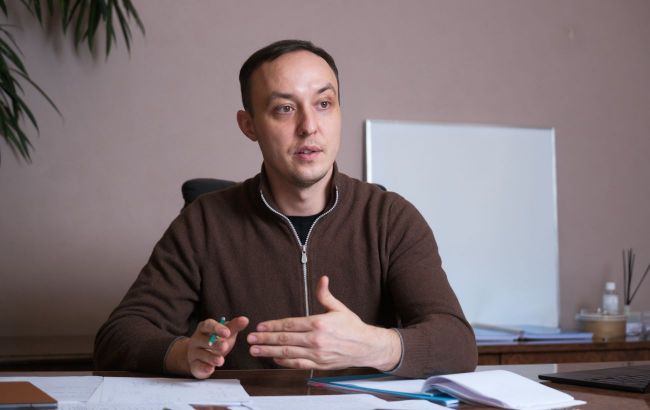 Ukraine's Presidential Commissioner for Sanctions Policy, Vladyslav Vlasiuk (photo: Vitalii Nosach, RBC-Ukraine)
Ukraine is calling on the European Union to apply the anti-circumvention tool more broadly — a mechanism designed to prevent sanctions evasion through third countries, Ukraine's Presidential Commissioner for Sanctions Policy, Vladyslav Vlasiuk, told journalists.
According to Vlasiuk, after the adoption of the EU's 20th sanctions package, which included direct restrictions on Kyrgyzstan due to the risks of re-exporting sanctioned goods to Russia, 50 legal entities linked to high-risk sanctions operations ceased activities in the country.
"This demonstrates that the mechanism works and encourages transit countries to strengthen control over exports and financial operations," he stressed.
At the same time, Ukraine has long been recording abnormally high volumes of exports of certain categories of goods from the EU to several third countries.
This gives grounds to believe that part of these products subsequently ends up in Russia, despite steps taken by the governments of certain states to strengthen control.
Existing mechanisms for monitoring and preventing re-exports currently remain insufficient.
"That is why we believe the anti-circumvention tool should be applied more broadly — both regarding goods and individual jurisdictions," the Presidential Commissioner said.
As an example, he cited Hong Kong, through which sanctioned goods worth at least 47 million euros were supplied to Russia between January 2024 and February 2025.
These include telecommunications equipment, signal generators, oscilloscopes, and electronic components that can be used in military communication systems, electronic warfare, navigation, and electronics manufacturing.
Vlasiuk stressed that particular concern is caused by supplies of computer numerical control machines through countries in Central Asia and the Caucasus.
He explained that after the start of the full-scale war, exports of such machines from the EU to Uzbekistan increased by more than 700%, and to Kazakhstan by nearly 480%.
At the same time, in 2024–2025, Uzbekistan already exported European-made CNC machines to Russia worth more than 1.4 million euros.
"All these data confirm the systemic nature of using third countries to circumvent sanctions," Vlasiuk said.
He added that the country continues working with European partners to expand the list of goods and jurisdictions that should be included in the EU's 21st sanctions package.
EU sanctions against Russia
The European Union recently officially approved its 20th package of sanctions against Russia, which became the largest in the past two years. The restrictions target the energy sector, military-industrial complex, and financial sector.
EU countries have also begun preparing a new, 21st package of sanctions against Russia. The main focus of the new economic restrictions will be on energy resources.