Ukraine Defense Contact Group gets new NATO coordination system for military aid


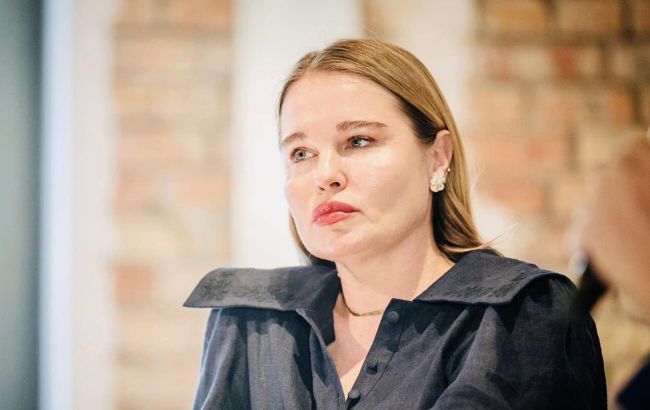 Alyona Getmanchuk, head of Ukraine's Mission to NATO (photo: facebook.com_alyona.getmanchuk)
The change in leadership at Ukraine's Ministry of Defense did not bring the work of the Ukraine Defense Contact Group to a halt. Following the reform, the group moved to a system of continuous coordination at different levels, Alyona Getmanchuk, head of Ukraine's Mission to NATO, said in an interview with RBC-Ukraine.
"It had no impact. The gap caused by the absence of a full-fledged minister did not interrupt the work of the Ukraine Defense Contact Group (UDCG), as the reform of the UDCG that we carried out over the past year made the process continuous," Getmanchuk said.
According to her, the group's work is no longer limited to meetings of defense ministers. After NATO, at the initiative of Germany and the United Kingdom, became involved in the coordination and organizational work of the UDCG, several key mechanisms were created to ensure the continuity of the process.
How the new system works
One of them is the UDCG Leadership QUAD format, which includes the United Kingdom, Germany, Ukraine and NATO. Meetings in this format are held either at the level of defense ministers or their deputies between the group's meetings.
In addition, a UDCG Team was created at NATO headquarters at the level of the Alliance's International Staff. It tracks partner countries' contributions on a daily basis: what assistance they have pledged to Ukraine and at what stage its delivery currently stands.
Another element of the reform was the UDCG Delivery Unit, an expert-level working group that includes representatives of the United Kingdom, Germany and Ukraine, including staff from Ukraine's Mission to NATO, as well as NATO's International Staff. Its meetings are held weekly.
"There is also the UDCG Delivery Unit, an expert-level working group that includes representatives of the United Kingdom, Germany and Ukraine, including representatives of Ukraine's Mission to NATO, as well as NATO's International Staff. Meetings are held here every week, where the fulfillment of all commitments undertaken by countries is also tracked, and preparations continue," Getmanchuk explained.
Thus, coordination of military assistance to Ukraine continues between the main UDCG meetings, while the fulfillment of partners' commitments is monitored on an ongoing basis.
Earlier, Alyona Getmanchuk, head of Ukraine's Mission to NATO, noted that the Alliance increasingly views Ukraine not only as a recipient of assistance but also as a source of its own defense capabilities. According to her, Ukraine's combat experience and the capabilities the country possesses could eventually strengthen NATO's European component and partially compensate for capabilities currently provided by the United States.