Ukraine and Germany to scale up Linza drone manufacturing

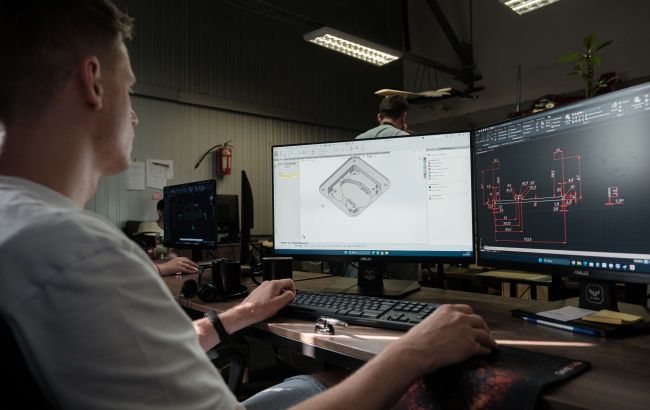 Illustrative photo: drone production (Getty Images)
Ukraine, with Germany's support, is scaling up production of the Linza strike-reconnaissance drone, which is capable of destroying targets and conducting tactical battlefield surveillance, according to the Ukrainian Ministry of Defense.
The project is being implemented under the Build with Ukraine initiative. Ukrainian company Frontline Robotics and Germany's Quantum Systems have agreed to expand serial production of the unmanned aerial vehicle to meet the needs of Ukraine's Defense Forces.
The Defense Ministry said the Linza is a tactical-level bomber drone capable of performing both strike and reconnaissance missions. The UAV is equipped with a gyro-stabilized camera with digital zoom, enabling real-time surveillance and fire adjustment. Its maximum payload is up to 2 kilograms, with an operational range of up to 10 kilometers.
The drone's primary mission is the destruction of enemy personnel and equipment, as well as remote mine-laying. At the same time, its technical capabilities allow it to be used for tactical reconnaissance, particularly in areas of active combat.
One of the drone's key advantages is an external antenna, which allows the operator to control the UAV from a protected shelter. This reduces risks to personnel and increases the survivability of drone crews on the battlefield.
Scaling up Linza production in cooperation with the German partner aims to increase the number of modern UAVs available to Ukrainian units and to speed up their delivery directly to the front lines.
The cooperation format includes:
-
localization of drone assembly in Ukraine;
-
joint integration of combat modules and guidance systems;
-
use of Ukrainian combat experience to modernize the UAV;
-
gradual relocation of parts of the production chain to Ukraine.
This approach enables faster production scaling, reduces dependence on imports, and allows rapid adaptation of drone capabilities to the needs of Ukraine's Defense Forces.
Germany's support for Ukraine
Since the start of the full-scale war, Ukraine and Germany have built a systematic partnership in drone production, gradually moving from one-off deliveries to joint serial production and technology localization.
On December 22, German Defense Minister Boris Pistorius stated that Russian leader Vladimir Putin shows no signs of being ready to end the war against Ukraine.
In response, Germany is preparing significant changes to the Federal Intelligence Service. The government plans to grant the agency substantially broader powers: in addition to collecting intelligence, it will be able to directly counter threats to the state, including conducting cyberattacks and special operations abroad.