Trump was ready to strike Iran: Arab leaders stepped in to stop it

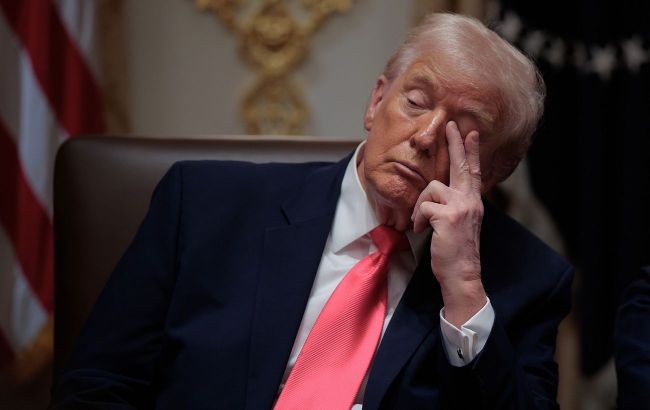 Donald Trump, President of the US (photo: Getty Images)
Donald Trump was preparing to launch a military strike against Iran the day before, but changed his plans at the last moment due to a request from key Arab allies. Leaders in the region fear a large-scale war that could instantly destroy their economies and critical infrastructure, according to The Jerusalem Post.
Donald Trump personally confirmed on his Truth Social network that he would not strike Iran at the request of Arab countries. According to Trump, the allies believe in a new deal. One that would be very acceptable to Washington.
Is the only reason the deal?
Of course not. Arab leaders are acting pragmatically because the risks are too high in the event of a renewed hot phase of confrontation between Tehran and Washington. Analysts explain: even a limited US strike would provoke Iran's wrath, and all its neighbors would come under attack.
Experts highlight the main targets of Iranian missiles:
- Desalination plants: without them, the region would be left without water.
- Electrical grids: massive blackouts would paralyze cities.
- Oil infrastructure: global fuel prices would skyrocket.
- Shipping lanes: the Strait of Hormuz could be blocked for a very, very long time.
Different priorities among allies
The interests of the parties do not always align, as each has its own goal, the article states. For the White House, the main issue is the nuclear program, while Israel, in addition to that, wants to destroy proxy groups. Arab countries, for their part, are concerned about the security of their own borders.
William F. Wechsler, senior director of the Middle East programs at the Atlantic Council, explains the differences:
"For Trump, it is the nuclear file; for Israel, it is proxies and rockets; for the Gulf, it is Hormuz and shorter-range weapons like drones."
Despite all the disagreements, Arab governments are united. They oppose significant escalation.
Skepticism towards US strategy
Privately, the region's leaders do not like the Iranian regime. Many want it gone. But they do not trust Washington because Trump does not have a clear plan.
"Most Gulf governments would prefer an outcome that removes the Iranian regime," Wechsler noted, "but are skeptical that the US has a plan, much less the capacity, to achieve that objective in the near term."
What is the situation around Iran
Tehran has offered to transfer over 400 kg of uranium to Russia for storage, but Washington disagrees with this. Getting rid of the uranium is precisely the main demand of the US.
"So, first on the Russia taking possession of the enriched uranium. Look, these things are being discussed through negotiation. That is not currently our plan," Vance stated.
Meanwhile, Iran has officially laid out its conditions for concluding peace with the US. Among other things, there is a clause requiring the US to pay compensation to Tehran.
In parallel with Iran's demands, it has emerged that the US may temporarily ease oil sanctions against Iran and allow limited peaceful nuclear activities during negotiations.