Trump's latest move sends oil prices higher — what comes next

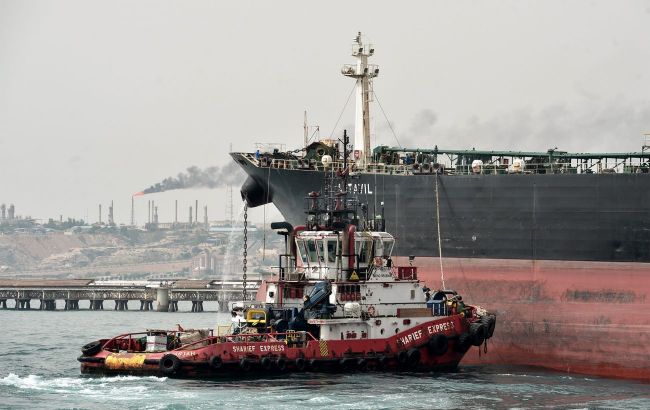 Photo: oil prices are rising due to US president statements (Getty Images)
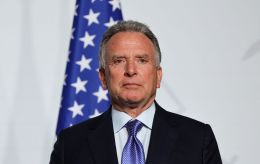
Oil prices rose as traders reacted to statements by US President Donald Trump about continuing attacks on Iran, according to Reuters.
Brent crude futures closed up by $7.87, or 7.78%, at $109.03 per barrel. US West Texas Intermediate (WTI) crude rose by $11.42, or 11.41%, to $111.54 per barrel, marking the largest absolute price increase since 2020.
Both benchmarks remained below the roughly $ 120-per-barrel highs reached earlier in the conflict.
Trump previously said military operations against Iran would intensify, but did not specify a timeline for ending hostilities. He also provided no details on steps that could lead to reopening the Strait of Hormuz.
“If Iran's oil infrastructure is possibly now at risk, and with more damage in the area now very likely, even if left intact, the restart of oil flows in the region (is) now looking to be delayed further,” said Dennis Kissler, senior vice president of trading at BOK Financial.
WTI prices, which usually trade below Brent, were nearly $3 higher because the US contract was for May delivery, while Brent was for June delivery. The premium of WTI over the global benchmark was the highest in a year.
What’s next for the markets
“Market's expectation is that if the Strait of Hormuz opens up in a couple of weeks, this risk premium will immediately go down,” said John Kilduff, partner at Again Capital.
Dallas Federal Reserve Bank President Lori Logan said that a quick “resolution of the war” could mean the economic impact remains relatively moderate.
She added that Brent crude could average around $95 per barrel in a baseline scenario and reach $130 in a worst-case scenario in the second half of the year, while near-term prices could rise to $120–130 per barrel.
It should be recalled that after the start of US and Israeli operations against Iran, Tehran blocked the Strait of Hormuz — a key global energy artery through which about 20% of the world’s oil consumption and a significant share of liquefied gas pass.
Amid the blockade, Europe is preparing for the most serious energy crisis in years, with calls for people to work from home and reduce car use to cut fuel consumption.
According to Bloomberg, the Trump administration has begun analyzing the potential impact on the US and global economy if oil prices surge to $200 per barrel.