White House denies reports Trump team studying $200 per barrel oil

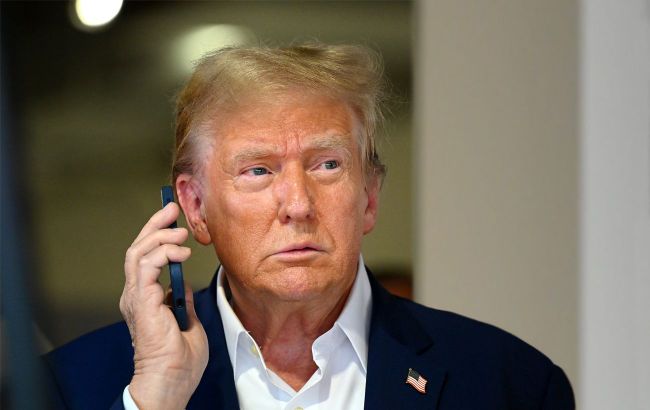 Donald Trump, President of the US (photo: Getty Images)
The team of US leader Donald Trump is analyzing the consequences of a sharp spike in oil prices to $200 per barrel. This scenario is being considered amid the risks of escalating the war, reports Bloomberg.
The administration of US President Donald Trump is studying the potential consequences of a sharp rise in oil prices to $200 per barrel.
According to agency sources, officials are analyzing how such a price shock could affect the US economy and global markets. This suggests that Washington is preparing even for the most negative scenarios.
Why the $200 per barrel scenario is being considered
The main reasons are the war in Iran, the risks of further escalation, and threats to oil supplies. A key factor remains the situation in the Strait of Hormuz, through which a significant portion of the world’s energy supplies pass.
Experts warn that even at $170 per barrel, prices would already deal a serious blow to the global economy, while $200 could lead to large-scale consequences.
Impact on the economy
A sharp rise in oil prices could:
- Accelerate inflation;
- Increase fuel, logistics, and commodity prices;
- Trigger an economic slowdown or even a recession.
Since oil is a fundamental resource for most industries, its price increase automatically raises costs across nearly all sectors of the economy.
How realistic is this scenario
At the same time, the US administration itself has publicly stated that $200 per barrel appears unlikely, though it is not entirely ruled out amid geopolitical tensions.
Washington continues to seek ways to curb prices, including through strategic reserves and other market-influencing tools.
Immediately after the US and Israel launched their operation against Iran, Tehran closed the Strait of Hormuz, which was vital to global oil supplies.
As a result, global oil and fuel prices spiked.