Threat to Odesa and Mykolaiv: Russia develops new surface drone

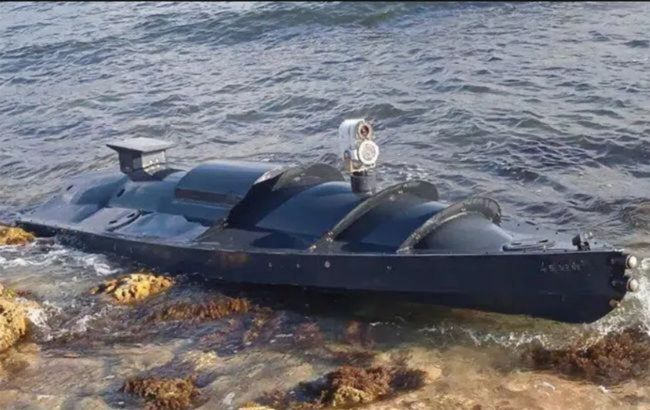 Photo: sea drone (screenshot from video)
Russia announced the alleged serial production of a new sea drone. Such developments could potentially expand the range of threats to Ukraine’s coastal regions, particularly Odessa and Mykolaiv, according to DEFENSE EXPRESS.
The Russian research and production center Ushkuynik has reported conducting tests of an unmanned surface vessel called Skorlupa, whose key feature is a control system based on a fiber‑optic cable.
The boat’s hull includes a separate compartment with a sliding hatch designed to carry FPV drones. According to available information, up to two drones can be housed inside. The tests used Knyaz Vandal Novgorodsky FPV drones, also known by the abbreviation KVN, in a fiber‑optic version.
Deployment scenario and stealth
The tests took place in the waters of the Black Sea. Footage released shows a hatch opening in the vessel’s hull, after which an FPV drone takes off, maneuvers for some time, and then conducts a simulated attack on a maritime target, which likely imitates a similar unmanned surface vessel.
The use of fiber‑optic communication significantly reduces the likelihood of detection, as the vessel does not emit radio signals. The platform’s small size further complicates its detection.
Potential risks for coastline
Although it is officially claimed that such vessels are intended to intercept maritime drones, their characteristics also allow for strike use.
The distance from the coastlines of odessa and mykolaiv to temporarily occupied territories is about 60 km, which falls within the stated range of fiber‑optic FPV drones, estimated at 50–65 km.
Potential targets for such drones could include air defense elements and other facilities located near the coastline.
The European defense sector has intensified its shift from experimental developments to serial production of counter‑drone systems, responding to the growing threat posed by inexpensive and widely used UAVs.
At the same time, approaches to warfare shaped by current conflicts are increasingly being taken into account in the modernization of NATO armed forces, where new developments simultaneously address unmanned technologies and measures to improve the survivability of armored vehicles on the battlefield.