Thousand cuts tactic: How Russia is using World War II experience against Ukraine

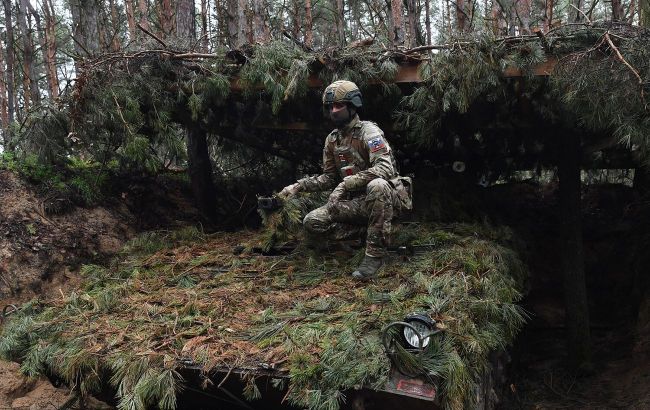 Illustrative photo: Russia attacks Ukrainian positions with small groups (Russian media)
After four years of full-scale war, Russia has completely abandoned attempts to achieve a large-scale breakthrough on the front, shifting instead to a "thousand cuts" tactic, according to France24.
Reviving Soviet methods
According to experts from the Netherlands Institute of International Relations Clingendael and the University of Portsmouth, Russia’s current tactic is an adaptation of Soviet covert infiltration methods from World War II.
Russian groups typically do not exceed 10 soldiers, and most often consist of only 2–3 soldiers. The goal of these micro-units is to remain as discreet as possible from Ukrainian drones. To evade thermal imaging, soldiers use thermal foil or specialized cloaks, which they hold away from their bodies.
Analysts at the Atlas Institute note that this approach has already brought Russia tactical successes in key cities such as Kupiansk and Pokrovsk.
A "poor man’s strategy" and resource exhaustion
Experts describe this approach as a "poor man’s strategy," which Russia has resorted to due to its inability to achieve a real strategic breakthrough.
Security expert Erik Stijnman from the Dutch Clingendael Institute notes that even with higher losses, the Russian side is "more capable of absorbing the losses."
Will Kingston-Cox from the International Team for the Study of Security Verona adds that the "thousand cuts" method does not always lead to territorial gains, but it reflects a significant shift in the mentality of the Russian army from seeking a "hammer blow" to "low glamour, high persistence."
Propaganda effect
The tactic carries not only military but also political significance. In the summer of 2025, incidents became more frequent when Russian soldiers planted flags in the center of Ukrainian villages just to make photo.
Although these incursions are often brief and the flags are quickly removed by the Ukrainian Armed Forces, the images create a false impression of rapid Russian advances amid peace negotiations.
Ukraine’s response
The Ukrainian army is already adapting to these new challenges. Experts report that the Ukrainian Armed Forces are increasingly using ground drones along the front line to minimize direct contact between infantry and Russian saboteurs.
In addition, Ukraine has intensified strikes on energy and military infrastructure deep inside Russian territory, seeking to make a war of attrition increasingly painful for the enemy.
New Russian tactics in strikes on energy infrastructure
As a reminder, Andriy Herus, head of the Verkhovna Rada Committee on Energy, previously stated that Russian forces are focusing their attacks primarily on large energy facilities located more than 100 kilometers from the front line.
According to him, small and medium-sized generation facilities (with a capacity of 1–10 MW) are rarely targeted, due to the low effectiveness of such attacks on the overall energy system.