The unity Ukrainians still fight for: How Unity Day was born and why it matters

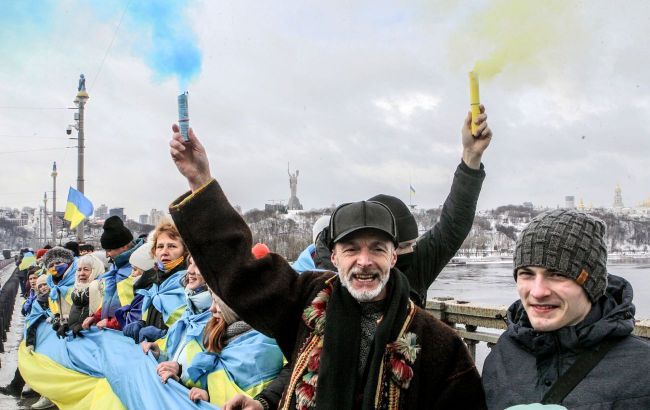 Ukraine’s Unity Day is celebrated on January 22 (photo: Vitaliy Nosach/RBC-Ukraine)
Every year on January 22, Ukraine marks Unity Day. Traditionally, patriotic events take place on this day, and Ukrainians form symbolic chains of unity. However, due to Russia’s full-scale war against Ukraine, this year the holiday is being observed without large-scale celebrations.
RBC-Ukraine explains the history of Unity Day and its significance for Ukrainians.
The Act of Unification of 1919: how it all began
On January 22, 1919, the Act of Unification of the Ukrainian People’s Republic and the West Ukrainian People’s Republic was solemnly proclaimed in Kyiv’s St. Sophia Square. The document confirmed the unification of Ukrainian lands and became one of the key steps in the formation of Ukrainian statehood.
At that time, both republics were in an extremely difficult situation. The Ukrainian People’s Republic had, in a short period, endured a war with the Bolsheviks and a coup d’état, while the West Ukrainian People’s Republic was engaged in fighting with Poland.
In practice, only the Ukrainian People’s Republic had any international recognition, and even that was limited. It came from Bolshevik Russia and the states of the Quadruple Alliance, which had been defeated in World War I. This is why the idea of uniting Ukrainian lands offered far greater chances for building an independent state.
After the Act of Unification was proclaimed, the West Ukrainian People’s Republic changed its name to the Western Region of the Ukrainian People’s Republic. The government of the Ukrainian People’s Republic provided financial assistance to the western regions, including funds for food supplies, transport development, military construction, and cultural initiatives.
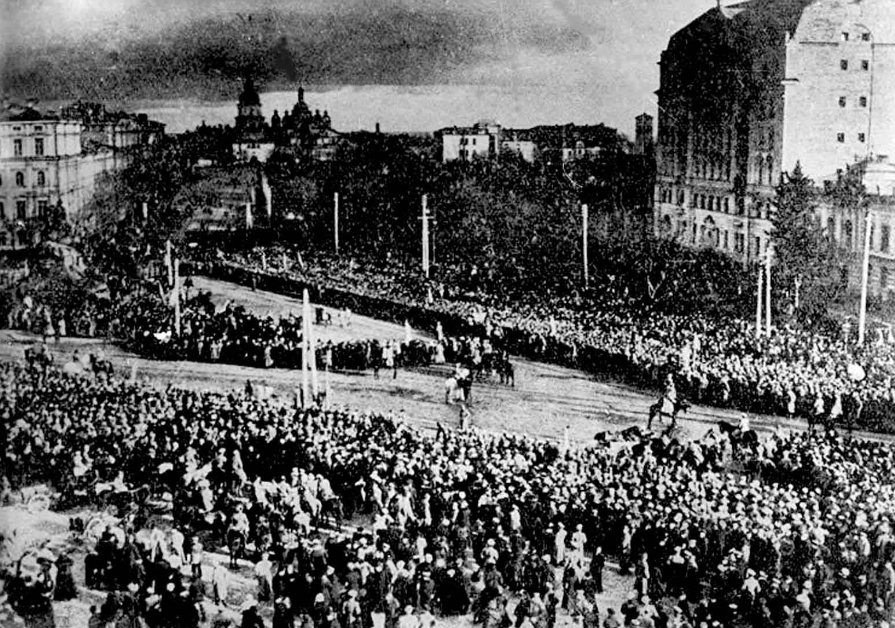
Proclamation of the Act of Unification at St. Sophia Square on January 22, 1919 (photo: Ukrainian Institute of National Memory)
Between two fronts: why the unification did not last
Despite the symbolic and political significance of the Act of Unification, it proved impossible to implement it in practice. The main reason was the continued war against both White and Red Russian forces.
In February 1919, government institutions of the Ukrainian People’s Republic were forced to leave Kyiv after the city was occupied by the Bolsheviks. Later, most of the Western Region of the Ukrainian People’s Republic was taken over by Polish troops, Northern Bukovyna was seized by Romanian forces, and Zakarpattia became part of Czechoslovakia.
At the same time, the date of January 22, 1919, has forever remained a landmark in the history of Ukrainian state-building, as it united Ukrainian lands, even if only for a short time.
The human chain of 1990: how it happened
The first unity chain was formed on January 21, 1990. On the eve of the 71st anniversary of the unification of the Ukrainian People’s Republic and the West Ukrainian People’s Republic, nearly three million people joined hands to connect Ivano-Frankivsk, Lviv, Rivne, Zhytomyr, and Kyiv. At that time, Ukraine was still part of the Soviet Union. The unity chain was organized by the People’s Movement of Ukraine.
This action became one of the largest of its kind in world history. The length of the chain exceeded 770 kilometers. The event marked another important step on Ukraine’s path toward independence.
Unity Day of Ukraine officially received state status in 1999 during the presidency of Leonid Kuchma. Under Viktor Yanukovych, the holiday was not observed at the state level, but after the Revolution of Dignity, it once again began to be officially commemorated.
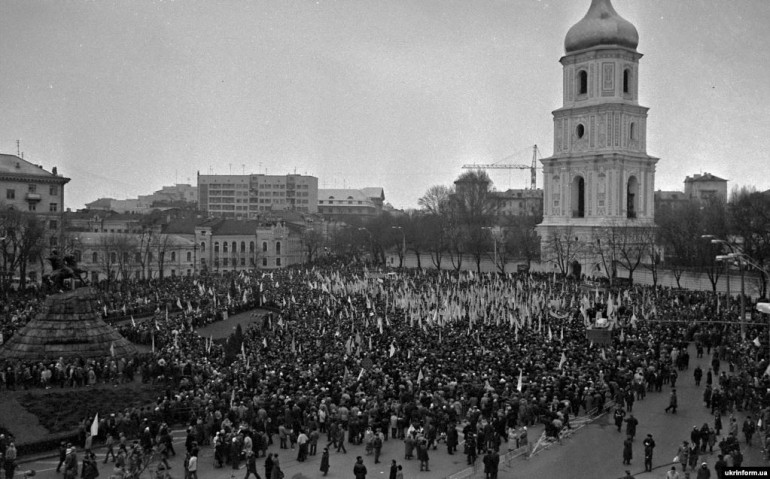
Participants in the “Human Chain” action at St. Sophia Square, Kyiv, January 21, 1990 (photo: uinp.gov.ua)
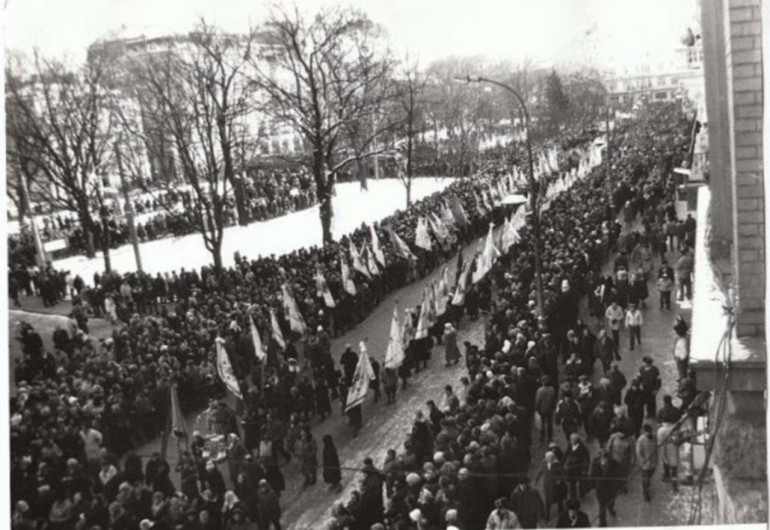
“Human Chain” on Svobody Avenue in Lviv, January 21, 1990 (photo: uinp.gov.ua)
Unity during war: how the holiday is celebrated today
Since then, Ukrainians have formed chains of unity every year on Unity Day, although they are no longer as large-scale. In Kyiv, the traditional location is the Paton Bridge, where people symbolically connect the right and left banks of the Dnipro River.
During the coronavirus pandemic in 2021, the unity chains were held online. After the start of Russia’s full-scale invasion, large-scale celebrations have not been held in Ukraine.
At the same time, the event has extended far beyond Ukraine. In 2023, refugees organized chains of unity in 25 countries around the world. Interestingly, even Ukrainian polar researchers at the Akademik Vernadsky Antarctic station took part in the flashmob.
This year, a symbolic chain of unity was held in Poltava, stretching from Heroes of Ukraine Square to Sobornyi Square. Both local residents and internally displaced people joined the event.
The Ukrainian community in Australia also announced a series of events in Sydney, Melbourne, Canberra, and Perth to show solidarity with their homeland and commemorate the anniversary of the Act of Unification.
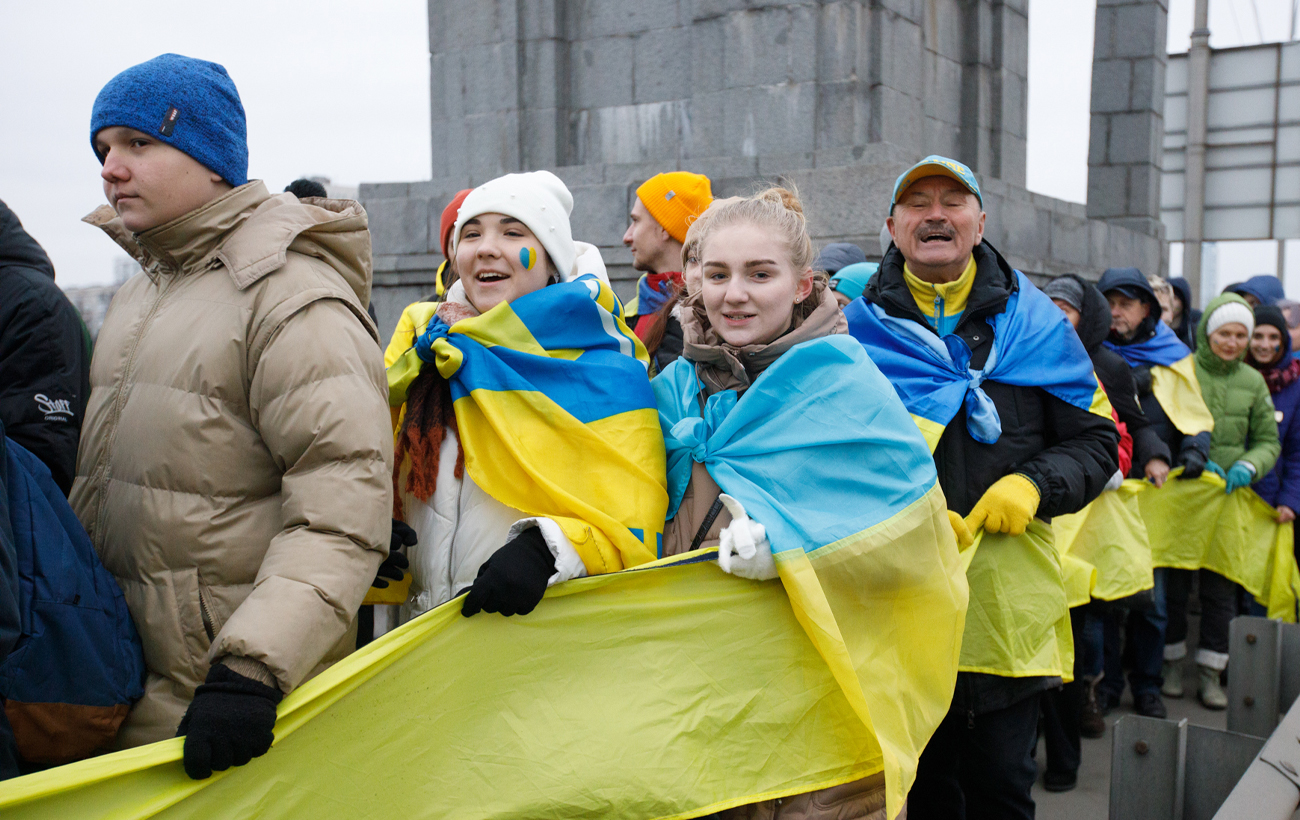
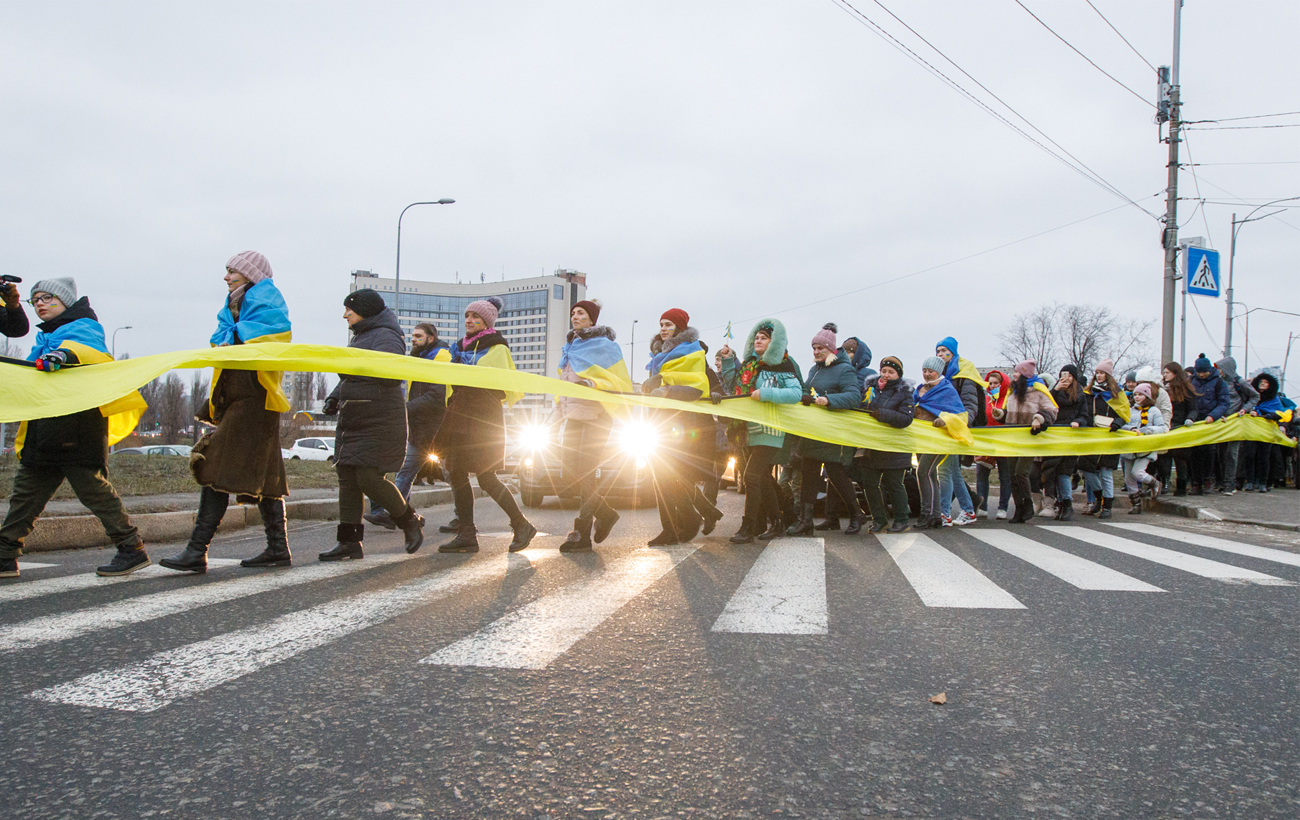 Traditionally, Ukrainians form “human chains of unity” on Unity Day (photo: Vitaliy Nosach/RBC-Ukraine)
Also read our extensive interview with Yurii Kostenko, a five-term member of the Ukrainian parliament, representative of the People’s Movement of Ukraine, and Minister of Environmental Protection and Nuclear Safety from 1992 to 1998, about how Ukraine’s Independence was declared, the events that led up to it, and the mistakes made by the authorities after the collapse of the USSR.
In preparing this publication, materials from the Ukrainian Institute of National Memory, Wikipedia, and a post by the Association of Ukrainian Organizations of Australia (AFUO) were used.