Tanker carrying Russian diesel unexpectedly changes course away from US coast

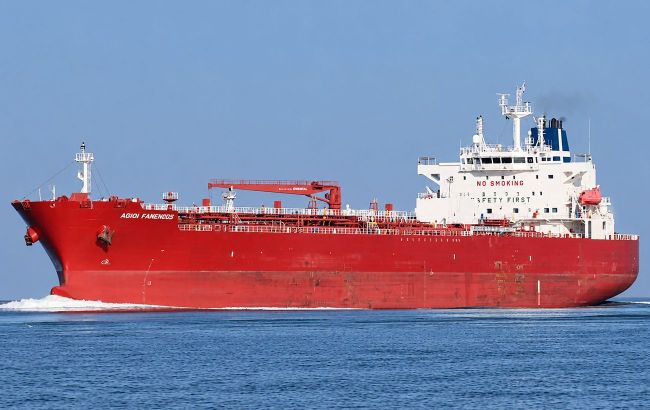 Photo: The Agioi Fanendes tanker carrying Russian diesel turns around off the US coast (Russian media)
Agioi Fanendes, a vessel carrying Russian diesel fuel to the US, has changed course. It is now moving away from the country's coast, Bloomberg reports.
Russian diesel fails to reach the US
A tanker carrying Russian diesel fuel that briefly signaled the US turned around about 400 nautical miles off New York.
The Agioi Fanendes, carrying around 40,000 metric tons of ultra-low-sulfur diesel (nearly 300,000 barrels), began moving away from the US East Coast. Since November 9, the vessel has been sailing in a zigzag pattern, according to a port report and vessel-tracking data compiled by Bloomberg.
So far, no shipments of Russian diesel fuel have reached the US, according to tracking data.
The diesel's journey
The Agioi Fanendes signaled New York after departing from the Russian Baltic port of Primorsk in late October. The vessel later changed its destination to "for orders."
The tanker is still "proceeding for orders as the discharging port is not confirmed yet," the vessel's manager, Eastern Mediterranean Maritime Ltd., said.
Last month, Russia said it had loaded four tankers with diesel fuel destined for the US under an agreement between Russian leader Vladimir Putin and US President Donald Trump.
Earlier, RBC-Ukraine reported that Trump called a law banning imports of Russian fuel into the US "pretty bad." He said he would look into the matter after speaking with a journalist at the White House.
Meanwhile, Trump's diesel deal with Putin is under threat. Tankers carrying Russian fuel have changed their destinations, listing locations other than the US coast.
The Trump administration is also seeking buyers for Russian diesel that is expected to arrive in the US soon. However, questions over the legality of accepting Russian shipments have made the fuel difficult to sell.
Meanwhile, Democrats are laying the groundwork for an investigation into the US-Russia diesel deal. Banks and port authorities have received letters with demands.