Sweeping blow to Russia and its allies: What the Graham-Blumenthal bill includes


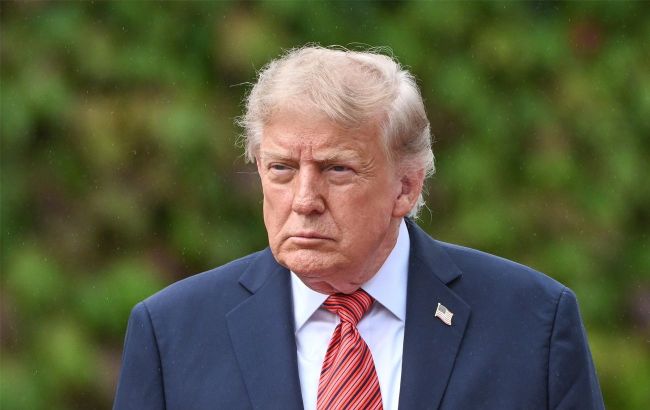 Photo: US President Donald Trump (Getty Images)
Today, the US House of Representatives is expected to give final approval to the Graham-Blumenthal bill, which provides for sweeping sanctions against Russia. However, its implementation will ultimately depend entirely on Donald Trump’s decision.
RBC-Ukraine looks at the bill’s key provisions and the potential consequences for the Kremlin.
Key points:
- Sector-wide blow: The sanctions target the Russian Central Bank, Sberbank, VTB, Gazprombank, the shadow fleet, and the Yamal LNG and Arctic LNG projects.
- Up to 100% secondary tariffs: The bill provides for measures against third countries that buy Russian energy or help Moscow evade sanctions.
- Sanctions locked in: The restrictions would remain in place until the fighting ends and an agreement acceptable to Ukraine is signed.
- Iran angle: Existing sanctions on Iran’s energy sector would be extended through 2031.
Impact on Russia
The document has changed names and been amended several times. Its final title is the Lindsey O. Graham Sanctioning Russia and Iran Act of 2026. This version of the bill effectively represents an evolution of US sanctions policy from a political signal into a systematic form of economic pressure on Russia.
The document combines both individual and sectoral sanctions. Personal restrictions would target Russia’s senior political and military leadership, as well as individuals involved in sanctions evasion, human rights violations, money laundering and destabilization efforts in Ukraine.
Shareholders in Russian liquefied natural gas projects, shadow fleet vessels and individuals associated with them could also face sanctions. These include traditional and effective measures such as asset freezes and visa restrictions.
Sectoral sanctions target key sources of financing for the Russian economy. They cover the energy and financial sectors, including the Russian Central Bank, Sberbank, VTB, Gazprombank and other state-owned financial institutions.
The bill strictly prohibits any US investment in Russia’s energy sector.
“In August last year, there were discussions about the possible return of the American company Exxon Mobil to the Sakhalin-1 oil and gas project in Russia, and this ban would make that scenario impossible,” Ukrainian President Commissioner for Sanctions Policy Vladyslav Vlasiuk previously said.
The restrictions would cover both US energy exports to Russia and a ban on imports of Russian uranium. Sanctions would also be expanded against the Kremlin’s Yamal LNG and Arctic LNG projects, including their executives and key shareholders.
Targeting the Kremlin’s partners
The bill pays particular attention to sanctions evasion. It is aimed at dismantling the mechanisms Moscow has adapted to keep its economy functioning: the shadow fleet, financial intermediaries, cryptocurrencies and third-country jurisdictions. Without cutting off these channels, even the toughest restrictions gradually lose their effectiveness.
At the same time, the legislation would increase economic pressure on Russia’s trading partners. Secondary measures could become the most significant instrument of influence. They provide for additional tariffs on countries that continue to import Russian energy or help Moscow circumvent sanctions.
An earlier version set the maximum tariff for such cases at 500%. During revisions, that figure was reduced to 100%, with certain exceptions. However, the underlying logic remained unchanged: raise the economic cost of doing business with Russia for third countries to the point where such cooperation becomes unprofitable.
The most significant political innovation in the document is a mechanism preventing the sanctions from being lifted. Under the bill, restrictions on Russia could not be removed until Moscow stops hostilities and signs a peace agreement “acceptable to the free and independent Government of Ukraine.”
The current version of the document also pays particular attention to Moscow’s key political partners — Iran and China. Although the bipartisan Stop China and Russia Act formally remains a separate bill, its core concept and approach have been fully incorporated into the Graham-Blumenthal legislation.
In particular, sanctions would officially extend to Iran’s energy sector, with existing restrictions extended through 2031.
At the same time, it is important to understand that the new restrictions would not take effect immediately and automatically after the bill is passed. The legislation does not categorically require the immediate application of specific measures against Russia. Rather, it provides the US president with an expanded set of tools that Donald Trump could use flexibly. Thus, even if Congress passes the bill, the final decision would rest with the US president.
The long road to approval
The bill was first introduced in the US Senate in April 2025 by senators from two rival parties — Republican Lindsey Graham and Democrat Richard Blumenthal.
By July of that year, the initiative already had strong support, with 85 of 100 senators prepared to back it. However, Lindsey Graham was in no hurry to push for an actual vote, waiting for an informal “green light” from Donald Trump while keeping the issue in the public spotlight.
Graham and Blumenthal also made a series of trips to Ukraine and European countries. The goal of the visits was to coordinate joint action and align positions with key US allies.
The situation began to move forward in late June this year, when, following another phone call with Putin, Trump began publicly expressing dissatisfaction with the Russian leader’s actions.
On June 29, Graham said he had reached a compromise with the US president. However, in order to secure White House support, some provisions of the bill had to be softened.
The bill received another boost following Lindsey Graham’s sudden death on July 11. His death ultimately brought Congress together around his legislative legacy. The bill was officially named after the late senator, and the Senate approved it in August.
The final House vote is now expected late Wednesday evening Kyiv time. After that, the only remaining step would be for the US president to sign the legislation.
RBC-Ukraine previously reported on Lindsey Graham’s political legacy and what he left behind in the United States and on the global political stage.
Quick Q&A
– What are the main sectoral sanctions included in the Graham-Blumenthal bill?
– The document introduces tough restrictions on Russia’s financial and energy sectors, including the Russian Central Bank, Sberbank, VTB and Gazprombank. It would also ban any US investment in Russia’s energy sector, imports of Russian uranium, and projects involving liquefied natural gas production.
– How does the US plan to punish third countries for helping Russia evade sanctions?
– Trading partners of Russia could face additional tariffs of up to 100%. This would apply to countries that continue buying Russian energy or help maintain the shadow fleet and financial intermediary networks.
– Will the new restrictions take effect immediately after the bill is signed?
– No. The sanctions would not take effect automatically. The bill gives the White House an expanded set of tools that President Donald Trump could use flexibly depending on geopolitical developments.