Strangest US space experiment: Why Earth’s orbit was filled with needles

 NASA continues to track the remaining West Ford copper needles (Photo: NASA)
More than 60 years ago, the United States carried out one of the strangest space experiments in history. In an effort to create a reliable military communications system, hundreds of millions of tiny copper needles were launched into Earth's orbit to form an artificial layer capable of reflecting radio signals, according to a NASA report.
During the Cold War, the U.S. government sought a dependable long-range communication method that would not rely on undersea cables or the natural ionosphere, which nuclear explosions could disrupt.
To solve the problem, the U.S. Air Force, in cooperation with the Massachusetts Institute of Technology (MIT), launched Project West Ford.
The mission sent hundreds of millions of microscopic copper dipoles into orbit, where they were intended to form an artificial layer capable of reflecting radio waves. In doing so, the project also created one of the earliest large-scale collections of space debris in history.
The launch and the idea behind an artificial ionosphere
The plan was to build an artificial ionosphere using tiny copper dipole needles. Once dispersed in orbit, the needles would create a cloud capable of bouncing radio signals across long distances.
The first launch attempt in 1961 failed. However, in May 1963, engineers successfully deployed between 120 million and 215 million copper needles into orbit using a dispenser filled with a naphthalene-based gel.
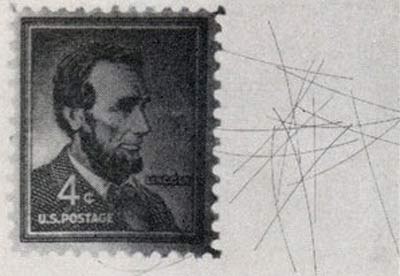
Needle size compared with a postage stamp of the time (Photo: NASA)
Key stages of the project and technical details
Data transmission: Researchers successfully proved the system worked by transmitting voice, text, and data between the Millstone Hill station in Massachusetts and Camp Parks in California.
Signal complexity: According to Dr. Donald McLellan of MIT's Lincoln Laboratory, the received signal experienced significant distortion in both frequency and timing because of differences in the orbital speeds and positions of the copper needles.
Criticism and risks: Astronomers warned that the artificial cloud could interfere with observations, while satellite operators raised concerns about the risk of spacecraft colliding with the orbiting needles.
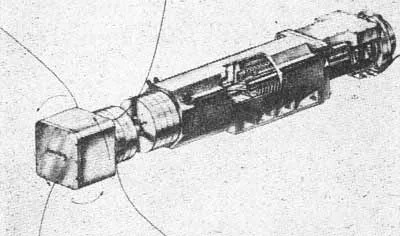
West Ford launch system (Photo: NASA)
What happened to the copper ring, and what remains in orbit today
The original plan assumed that solar radiation would quickly push the copper needles out of orbit, causing them to burn up in Earth's atmosphere. While most of the needles did re-enter and disintegrate, a significant number clumped together into larger clusters.
Because these clusters had much greater mass, they remained in orbit far longer than individual needles. According to NASA, even decades later, dozens of these clusters are still orbiting Earth, with some remaining at altitudes of more than 2,000 kilometers.
As fully functional communications satellites emerged, the need for an artificial ionosphere disappeared. However, remnants of Project West Ford remain in orbit as a lasting reminder of the early days of the Space Age.