Space changes human body forever: Shocking NASA experiment results

 AxEMU spacesuit will gain unique capabilities for survival in space (photo: Axiom Space)
Physiological changes
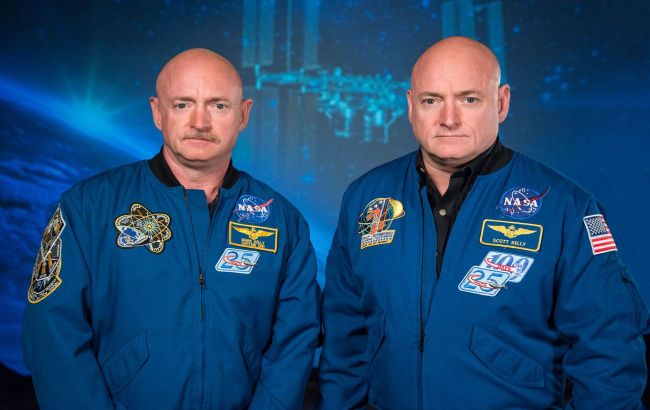
The study recorded clear changes in Scott Kelly’s body at both the physiological and molecular levels. Although the astronaut’s overall health indicators remained good, scientists observed several important transformations.
In space, Scott became slightly taller and at the same time lost some muscle mass — a typical issue that space crews constantly face due to the absence of gravity.
In addition, Scott returned to Earth 5 milliseconds younger than his twin brother due to the effect of time dilation.
The most striking findings concerned the astronaut’s chromosomes, specifically their terminal sections — telomeres, which are responsible for cellular aging. In orbit, Scott’s telomeres lengthened, which usually indicates a slowdown in aging processes. However, after returning to Earth, they quickly returned to their original state.
Genetic shift: which cells did not return to normal?
The experiment disproved myths that space completely rewrote the astronaut’s DNA, but it confirmed changes in so-called gene expression — meaning how the body actually uses those genes.
Even six months after landing, about 7% of Scott’s genes were still functioning differently than those of his Earth-bound brother.
Scientists identified 811 genes in different types of cells that did not return to their baseline levels.
Most of these cellular changes are directly related to two critical processes:
Immune system function: space forces the body’s defenses to remain in a constant state of stress or hyperactivity.
DNA repair: cells alter their regeneration mode in an attempt to protect themselves from cosmic radiation.
What does this mean for future Mars missions?
In addition to physical changes, tests showed a decline in Scott Kelly’s cognitive abilities. His thinking speed and decision-making accuracy decreased and remained low even after adaptation back on Earth.
Scientists note that such symptoms are common among crew members, and NASA now needs to develop new safety and protection measures for long-duration deep space missions.
At the same time, researchers emphasize that this study was the first of its kind, and its results are based on only one subject.
To determine whether these changes are a general rule for all humans or a unique feature of Scott Kelly’s biology, NASA needs to conduct additional tests with other astronauts.
This material is for informational purposes only and should not be used for medical diagnosis or self-treatment. Our goal is to provide readers with accurate information about symptoms, causes, and methods of detecting diseases. RBС-Ukraine is not responsible for any diagnoses that readers may make based on materials from the resource. We do not recommend self-treatment and advise consulting a doctor in case of any health concerns.