Shipping firms find new routes as partial Hormuz alternative — FT

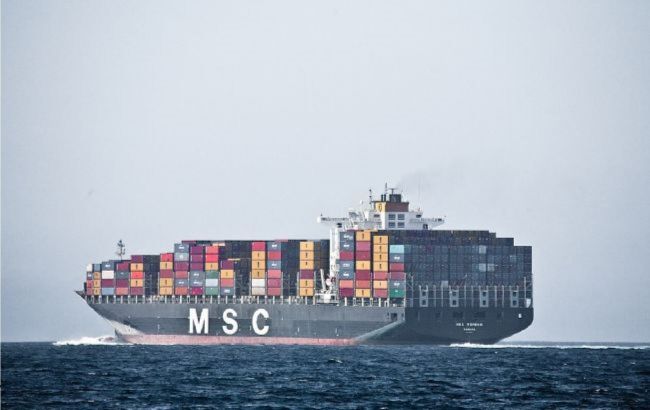 Shipping industry switches to trucking (photo: wikipedia.org/MSC)
Logistics companies massively shift cargo deliveries in the Persian Gulf to road transport due to the blockade of the Strait of Hormuz. This has triggered a record surge in shipping rates, according to the Financial Times.
Logistic shift, price surge
FT says ongoing attacks have effectively closed the strait to civilian shipping. Instead of the previous 135 vessels per day, only isolated ships are now passing through.
In response, major shipping companies, including MSC, Maersk, CMA CGM, and Hapag-Lloyd, have begun urgently developing alternative overland routes. They are transporting cargo by truck from ports in the Red Sea and the Gulf of Oman.
This shift in logistics has led to a sharp increase in costs. The price of shipping a standard 20ft container from Shanghai to the Persian Gulf has jumped from $980 to $4,131.
This figure has even exceeded the peak levels seen during the COVID-19 pandemic.
Impact on trade, humanitarian missions
Road transport can replace only a small fraction of the capacity of large container ships.
Overall trade flows to the Persian Gulf have dropped by 60–80%, and regional ports are now prioritizing only food and medical supplies.
Delivery delays currently reach up to 60 days.
The crisis has also significantly affected international aid. The UN World Food Program says it faces difficulties delivering supplies to Yemen, Djibouti, and Sudan.
In particular, a shipment of aid for Afghanistan now has to cross nine countries by land, delaying its arrival by 43 days.
Hormuz Strait situation
Tensions in the Middle East remain extremely high due to Iran's prolonged blockade of the strategic Strait of Hormuz.
Earlier reports said that global oil reserves are being depleted at an unprecedented pace due to the war in Iran. In the two months since the de facto closure of the strait, supply losses have exceeded 1 billion barrels, raising the risk of shortages and sharp fuel price spikes.
Amid the prolonged crisis and lack of progress in diplomatic negotiations, US President Donald Trump increasingly considers the resumption of large-scale military operations against Iran.
The White House is frustrated with the state of talks, as Tehran continues to ignore calls to reopen the maritime route.
At the same time, countries in the region are seeking alternative logistics solutions for energy exports. In particular, the UAE has found a way to bypass the Strait of Hormuz and double oil exports by accelerating construction of the West–East pipeline to the port of Fujairah in the Gulf of Oman.