Science of sleep: How to work out your perfect rest time

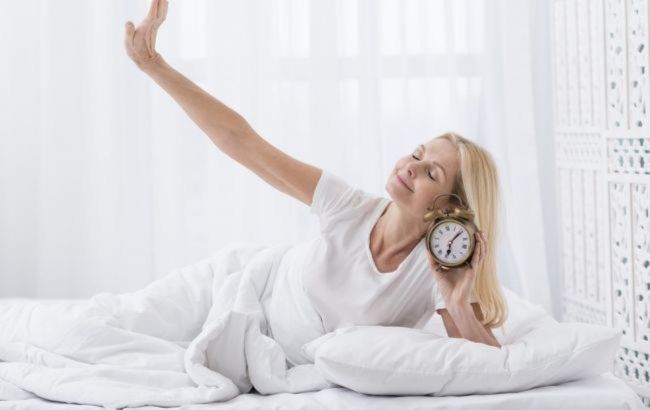 Say goodbye to the alarm clock stress (photo: Freepik)
While most people are used to the classic recommendation of eight hours of sleep, modern research and specialists increasingly emphasize that there is no universal standard. It turns out that how much sleep a person actually needs depends on individual biological characteristics, not just general guidelines. Clinical psychologist and professor Tony Cunningham states that when it comes to sleep, quality matters more than duration, and there is no single standard that fits everyone.
Most experts agree that adults should sleep 7–9 hours per night. However, Cunningham argues that for normal functioning, some people may need only 5–6 hours, while others require 9–11 hours.
Two factors that govern sleep
The expert explains that sleep is determined by two key processes, and to get proper rest, these internal mechanisms must work in sync. These are sleep pressure and the circadian rhythm.
Sleep pressure is the natural drive to sleep that builds throughout the day. The longer a person stays awake, the stronger this "hunger" for rest becomes.
Circadian rhythm is the brain's internal biological clock, which determines when to promote alertness and when to trigger sleepiness. Circadian rhythms can either support sleep or, conversely, cause sudden bursts of energy — such as the well-known second wind at night.
If these systems are out of balance (for example, due to an irregular schedule), even long sleep may not leave a person feeling rested.
Experiment: How to determine your personal sleep need
If you want to find out how many hours of sleep your body actually needs, you can try the following exercise during a vacation or days off.
Step 1. Go to bed when you truly feel sleepy. If you don't fall asleep within 20–30 minutes, it is a sign that your body isn't ready for sleep. In that case, it is recommended to get up, do something calming in dim light, and return to bed only when you start to feel drowsy.
Step 2. Remove distractions. Turn off alarms, hide clocks, and close curtains. The goal is to create a "cave-like" environment so that neither light nor sound indicates the time. Allow yourself to sleep until you wake up naturally.
Step 3. Let your body "repay its debt." In the first 2–3 days, you will likely sleep significantly longer (for example, until 10 or 11 a.m.). This is normal as the body may initially be catching up on sleep deprivation, but a stable rhythm will eventually shape.
Step 4. Find your time. Your individual sleep requirement will become clear by days 4–5 of the experiment. When you wake up naturally at roughly the same time for several days in a row and feel alert, that is your personal ideal.
Dr. Cunningham emphasizes that some people's biology allows them to function optimally on six hours of sleep, while others critically need up to 10 hours. According to him, the key indicator is not a number in an app, but how a person feels throughout the day without additional caffeine.
Why routine matters
The expert also advises not only going to bed at the same time, but also waking up consistently.
A regular schedule helps to:
- Synchronize the biological clock
- Improve sleep quality
- Fall asleep faster.
It is important to go to bed when sleepiness naturally appears, rather than simply out of fatigue.
Why sleep deprivation is dangerous
Remember that chronic sleep deprivation can have serious health consequences. In particular, sleeping five hours or less is associated with an increased risk of chronic diseases. Insufficient sleep also affects concentration, memory, and emotional state.
Thus, the idea of a strict "8-hour rule" is gradually becoming outdated. The modern approach to sleep is individual: listen to your body and find your own balance.
This material is for informational purposes only and should not be used for medical diagnosis or self-treatment. Our goal is to provide readers with accurate information about symptoms, causes, and methods of detecting diseases. RBС-Ukraine is not responsible for any diagnoses that readers may make based on materials from the resource. We do not recommend self-treatment and advise consulting a doctor in case of any health concerns.