Russians dip into savings as new sign of crisis emerges in Russia

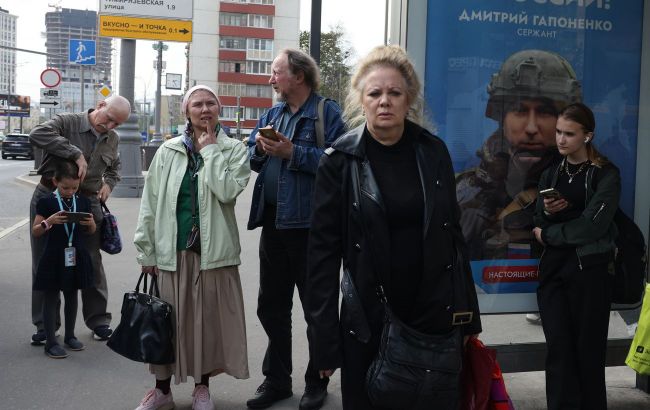 Photo: residents of Moscow on the street (Getty Images)
Consumer sentiment is deteriorating in Russia. People are saving less, withdrawing money from bank deposits and increasingly opting for used goods, according tp the Foreign Intelligence Service of Ukraine.
The consumer sentiment index among Russians fell to 89.5 points, its lowest level since May 2022.
The decline indicates growing uncertainty among Russians about their financial situation and the country's economic outlook.
Russians are saving less
Fewer people in Russia can afford to build up savings. The share of the population able to set aside "extra" money fell by 6.5% to 47.9%.
At the same time, 34% of Russians believe that now is a bad time to save money. Only 26% take a more optimistic view. According to Ukraine's Foreign Intelligence Service, these are the worst figures in the past two and a half years and point to declining confidence in Russia's economic stability.
Changes in consumer sentiment are also reflected in the behavior of bank depositors. In June, Russians withdrew 0.5 trillion rubles from bank deposits. New deposits totaled only 0.2 trillion rubles during the same period, failing to cover even the interest accrued by banks.
Experts estimate that Russians' real savings fell by 32.1% in the first quarter.
Demand for used goods is growing
Economic problems are increasingly affecting consumer behavior in Russia. The war against Ukraine, international sanctions, the economy's shift toward military needs and falling real incomes are forcing people to cut spending.
One sign of this trend is growing demand for used goods. In particular, Russians' spending on used cars increased by 13% in the first half of this year.
There are now almost five used cars for every new car sold in Russia. At the same time, the share of vehicles less than five years old fell from 30% to 25% over the year.
By contrast, the share of cars more than 10 years old increased to 41%.
Thus, Russians are increasingly choosing cheaper alternatives over new goods. This is affecting not only their spending but also gradually changing the country's overall consumption patterns.
Russians fear another mobilization
The prospect of a new wave of mobilization remains another source of public anxiety. As the Kremlin plans to continue its war against Ukraine, more Russians are considering leaving the country.
Concerns are also being fueled by talk of a possible mobilization following Russia's State Duma elections in the fall.
Amid growing demand from Russians, apartment rental prices in Armenia have risen by 30% over the past three months. The trend is linked to an increase in the number of Russians considering leaving the country.
As a reminder, Russia's budget is already facing a record deficit amid high government spending. In the first half of 2026, the deficit reached 5.73 trillion rubles, 1.7 times higher than in the same period last year.
In addition, Russian oligarchs and major investors are increasingly moving capital out of Russia, shifting it into cryptocurrency, foreign real estate and private investment funds.