Russians are rushing to move money abroad: Intelligence reveals what’s driving the exodus

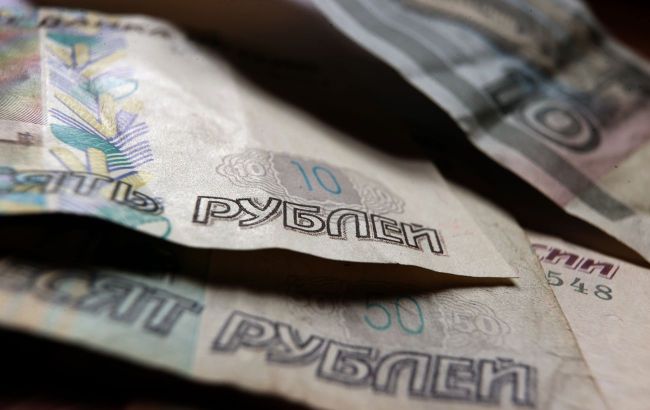 Photo: Russian rubles (Getty Images)
Russians have begun actively moving their savings abroad and buying foreign currency amid sanctions and expectations of new restrictions from the Kremlin, according to Ukraine's Foreign Intelligence Service.
Russians have sharply increased transfers to foreign brokerage accounts, seeking to move part of their capital out of the country before doing so becomes more difficult. According to intelligence data, from December 2024 through June 2026, Russian households transferred nearly 600 billion rubles to nonresident brokers.
This amount exceeds the total volume of similar transfers over the previous seven years combined.
Transfers increased particularly sharply in spring 2026. From April through June, Russians transferred about 42-45 billion rubles to foreign brokers each month, equivalent to more than $500 million.
According to Ukraine's Foreign Intelligence Service, about 40% of these funds represent an actual outflow of money from Russia. Three-quarters of that amount went toward so-called "parking" arrangements, in which a brokerage account is effectively used instead of a foreign-currency bank account.
Another quarter of the transfers was linked to preparations for a possible move abroad.
Russians are buying foreign currency again
At the same time, Russians have returned to actively buying foreign currency in cash.
In June, net purchases of foreign currency by Russians totaled 54.9 billion rubles. The figure reached 52.2 billion rubles in May and 51.8 billion rubles in April.
Thus, in just three months, Russians purchased nearly 159 billion rubles worth of foreign currency in cash. According to intelligence data, this is the highest figure since the first months of Russia's full-scale invasion of Ukraine.
At the same time, Russian citizens have begun withdrawing more money from bank accounts. From January through July, about 2 trillion rubles were withdrawn from Russia's banking system in cash. In July alone, Russians withdrew about 620 billion rubles.
What are Russians afraid of?
Ukraine's Foreign Intelligence Service links this behavior to sanctions and increasingly strict treatment of Russian money by Western banks.
Another factor was the EU's decision late last year to include Russia on its list of high-risk countries for anti-money laundering purposes.
At the same time, Russians fear the possibility of tighter domestic restrictions following the State Duma elections. Possible scenarios include the imposition of martial law or another mobilization.
For now, Russian banks continue to receive cash US dollars and euros through third countries despite sanctions on direct supplies of US and European currencies.
However, the situation could change if the US Congress adopts new tough sanctions against Russia. In that case, one of the channels for supplying foreign currency in cash could be cut off.
This could lead to a shortage of foreign currency in the Russian market, forcing the Central Bank of Russia to restrict its sale. If the European Union imposes similar restrictions, access to euros could also become more difficult.
It was previously reported that Russia's budget deficit continues to grow amid high government spending, including expenditures related to the war against Ukraine. In 2025, the deficit reached 5.7 trillion rubles, nearly five times the Russian government's initial forecast.
The situation also deteriorated in the first half of 2026: the federal budget deficit had already reached 5.73 trillion rubles, or 2.5% of GDP. That was 1.7 times higher than during the same period in 2025.