Russian tanker makes sudden turn in Baltic Sea

 Photo: Aframax oil tanker (Getty Images)
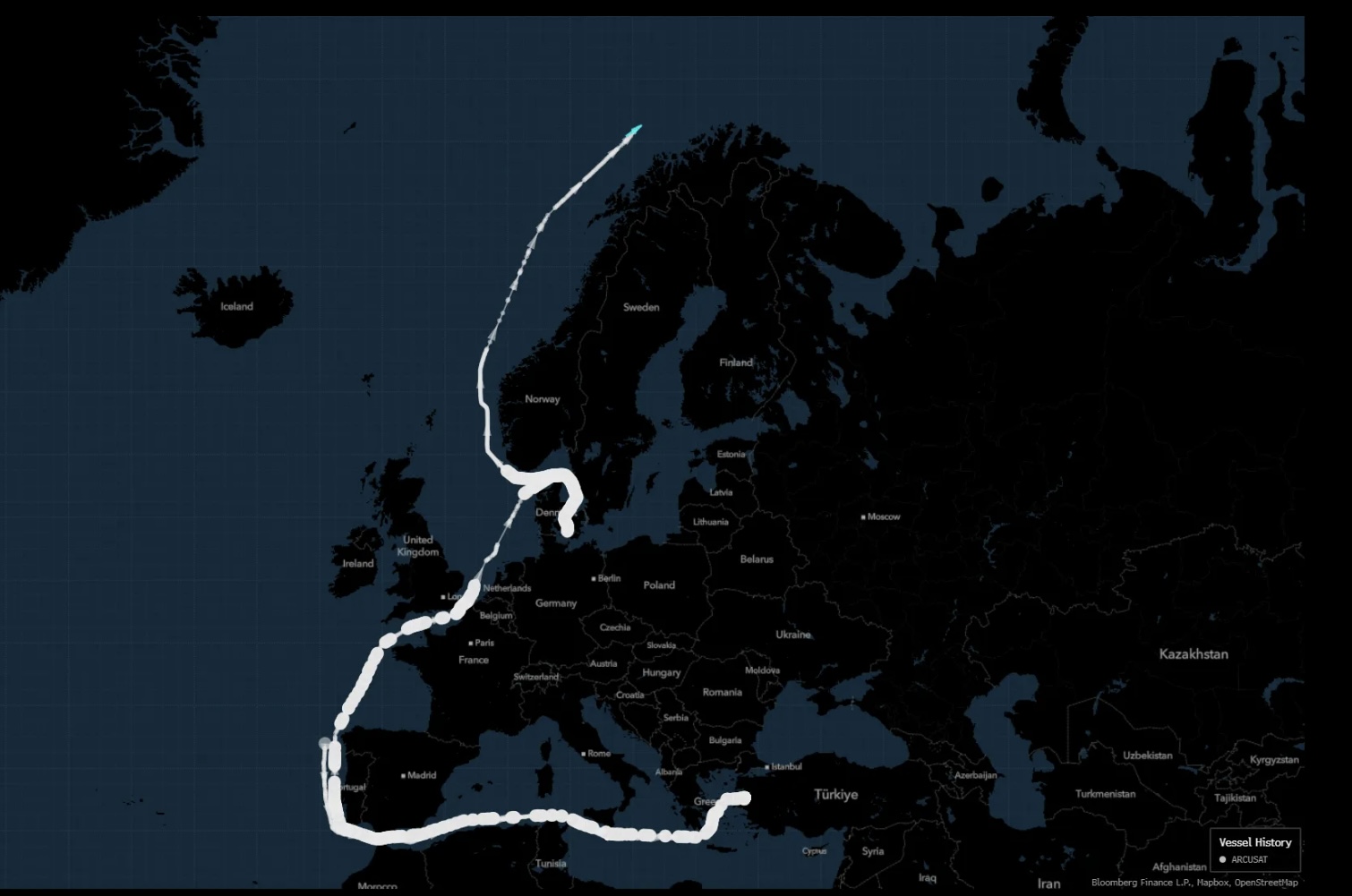
An Aframax oil tanker named Arcusat, which was heading for a Russian port, made an unexpected maneuver and turned back, avoiding entering the Baltic Sea, according to Bloomberg.
The tanker, which is associated with Russia's shadow fleet, attracted the attention of analysts with its unusual route. The ship, which was heading to load raw materials in one of the Russian ports, suddenly stopped moving towards the Baltic Sea, turned around, and headed in the other direction.
 Source: Bloomberg
Mysterious maneuver in the Baltic
Arcusat belongs to the so-called phantom tankers that Russia uses to circumvent Western sanctions and price restrictions on oil. The sudden change of course may indicate technical problems or new challenges for the Kremlin's logistics.
Key details of the incident:
- Geography: The turn took place just before entering the narrow straits leading to the Baltic Sea.
- Affiliation: The ship does not have transparent insurance or a clear ownership structure, which is a characteristic feature of a shadow fleet.
- Consequences: Such a disruption of the voyage delays Russian oil exports and creates additional logistical costs for the aggressor.
Germany turned away Russian tanker for the first time
Arcusat was heading to the Gulf of Finland to load Russian oil, but while passing through the narrow strait between Denmark and Sweden, the ship suddenly turned around and set course for the Arctic. According to German media reports, this was due to direct coercion by the German authorities, although the Federal Police has not officially commented on the investigation.
This is the first recorded case of a European country forcibly denying a shadow vessel access to the Baltic Sea. If such a strategy becomes systematic, it could completely paralyze Moscow's ability to export crude oil from the region.
The vessel utilizes the tactic of flags of convenience. In various databases, it is listed under the flags of Tanzania and Cameroon, which is a typical sign of an attempt to conceal the true owner.
Pressure on shadow fleet
Bloomberg experts note that there has been increased control over such vessels in international waters recently. This is not the first time that tankers operating in Moscow's interests have encountered difficulties when passing through important sea lanes.
Despite Russia's attempts to conceal routes by turning off AIS transmitters, satellite monitoring allows such anomalous movements to be recorded.
Washington has launched a large-scale operation against the shadow fleet attempting to export oil from Venezuela by manipulating flags and names.
In early January, US forces carried out a series of interceptions in neutral waters. The most high-profile case was the detention of the Bella 1 (Marinera) in the North Atlantic.
Almost simultaneously with the interception in the Atlantic, the US military carried out a successful operation in the Caribbean Sea, detaining another ship of the shadow fleet, the tanker Sophia.
In the Caribbean Sea, US special forces seized the sanctioned tanker Veronica, which was the sixth vessel detained as part of the operation. The vessel violated the embargo by manipulating documents and tracking systems to illegally transport oil for Iran, Russia, and Venezuela.
American lawmakers are demanding that Donald Trump's administration take radical steps, ranging from targeted sanctions to the mass arrest of ships carrying Russian oil.