Russian strikes on Ukraine's energy sector do not speed up battlefield progress, Estonian intel says

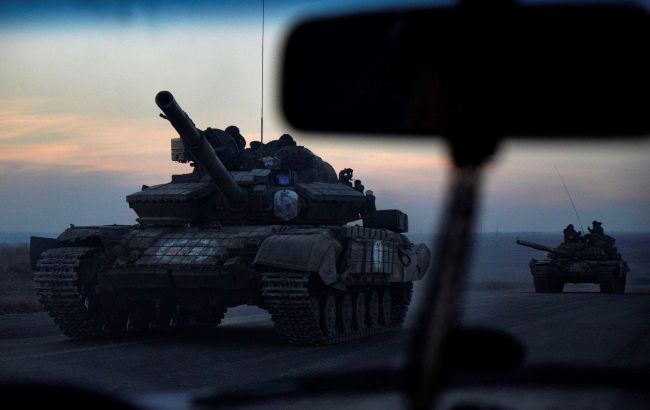 Photo: The pace of Russia's advances on the front lines has slowed (Getty Images)
Despite Russian strikes on Ukraine’s energy system, Russian frontline advances slowed at the start of 2026 compared to late 2025, said Ants Kiviselg, head of the Estonian Defense Forces Intelligence Center, according to ERR.
He noted that last week, the intensity of combat engagements on the front decreased compared to the previous week, although Russia continued attacking Ukraine’s energy infrastructure.
"Last week, there were on average 170 combat engagements per day, slightly fewer than the previous week, when there were around 200. At the same time, the advance of Russian units at the start of this year has been slower than in November and December last year," Kiviselg said.
He added that Russia’s main focus remains unchanged: it is attacking most actively in the directions of Pokrovsk and Myrnohrad, as well as Zaporizhzhia and Huliaipole.
"Russian units managed to advance in the northern part of Kharkiv region, toward Sloviansk, Kostiantynivka, and Pokrovsk, as well as in the western part of Zaporizhzhia region," he noted.
Kiviselg added that over the past week, the Ukrainian Armed Forces managed to make advances in the Kupiansk district.
Russian losses in the war
According to the General Staff of the Armed Forces of Ukraine, since the start of the full-scale war, Russia has lost approximately 1,224,460 personnel. In the past 24 hours alone, Russian losses amounted to 1,370 soldiers.
In addition, Ukrainian forces destroyed six tanks, four armored combat vehicles, 48 artillery systems, three multiple launch rocket systems, 527 tactical and operational drones, 180 vehicles, two specialized units, and one heavy flamethrower system.