Russian spy drones monitored Europe's nuclear bases for 18 months – The Guardian

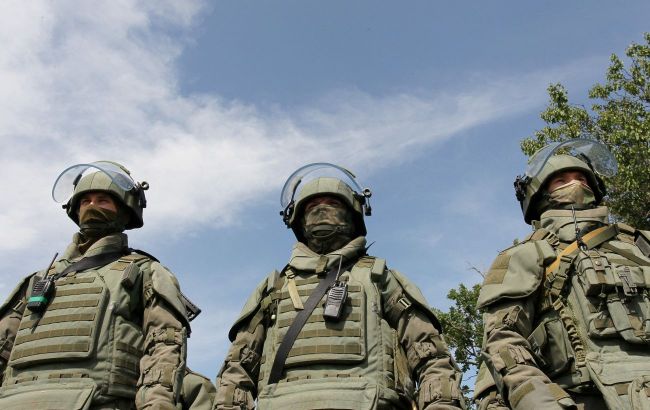 Photo: Russia spied on Europe's nuclear bases (Getty Images)
Russia carried out a large-scale 18-month espionage campaign targeting strategic nuclear sites across several European countries. Surveillance drones were reportedly launched directly from vessels belonging to Russia's shadow fleet, according to The Guardian.
Air defense gaps and the Kremlin's objectives
According to the report, analysts at the International Institute for Strategic Studies (IISS) identified at least 144 espionage incidents across more than a dozen European countries beginning in late 2024.
Russian intelligence operated with near impunity, as Western militaries failed to intercept or shoot down a single surveillance drone, exposing significant gaps in NATO's air defense capabilities.
Among the main targets were RAF Lakenheath in the United Kingdom, where US nuclear weapons are deployed, and Île Longue, France's base for nuclear-powered ballistic missile submarines.
Russian drones were also spotted over Kleine Brogel Air Base in Belgium and Volkel Air Base in the Netherlands, both of which store US air-delivered nuclear weapons.
In addition, drone activity forced the temporary closure of Copenhagen Airport in Denmark in September 2025.
How the spying operation worked
The operation was reportedly coordinated by Russia's GRU military intelligence.
The drones were launched from civilian ships and oil tankers sailing in international waters with their tracking systems switched off.
To collect intelligence and relay signals, Russian operators used tactics previously tested during combat operations in Ukraine.
French military investigators uncovered evidence of the militarization of civilian vessels after detaining the tanker Boracay, where they found a Chinese captain and two Russian mercenaries affiliated with a private military company.
According to researchers, the Kremlin combined intelligence gathering and NATO logistics mapping with psychological pressure and efforts to impose economic costs on Western countries.
The frequency of the drone launches appears to have declined only in 2026, after European naval forces began detaining suspicious vessels linked to Russia's shadow fleet.
Russia's growing provocations
Russia has significantly intensified its hybrid and military provocations against both Ukraine and NATO member states. Moscow is seeking to test the resolve of Western allies while intimidating countries on NATO's eastern flank.
Intelligence agencies recently reported a dangerous incident in low Earth orbit, where four Russian military satellites allegedly pursued Finland's Iceye-X36 satellite. The radar satellite is actively used by Ukraine's Armed Forces for reconnaissance, making the incident what officials described as an overt hostile act conducted at an altitude of about 550 kilometers (342 miles).
Intelligence officials have also warned that Russia is preparing additional provocations against NATO in the near future. According to intelligence sources, Russian President Vladimir Putin wants to test whether the United States would defend the alliance's smaller members, putting Poland and the Baltic states at increased risk of escalation.
Poland is already preparing for potential Kremlin actions. Polish intelligence has not ruled out the possibility that Russian forces could be used to threaten NATO countries along the alliance's borders. Facing setbacks in its war against Ukraine, Moscow is looking for ways to raise the stakes and may seek further escalation in the region.