Russian oil tankers wait weeks for buyers as exports hit a wall

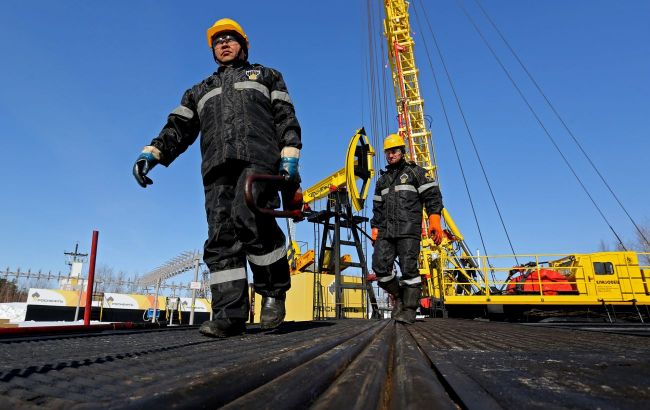 Photo: Oil production has fallen to a record low (Getty Images)
Russia is becoming increasingly dependent on crude oil exports as Ukrainian strikes on refineries have reduced its ability to process crude, reports Bloomberg.
How much oil Russia is exporting
In the four weeks through July 12, Russia's seaborne crude oil exports averaged 4.21 million barrels per day—just 10,000 barrels below the highest level recorded since the start of the full-scale invasion.
However, the increase in exports does not mean the crude is being sold quickly. On the contrary, more and more tankers are sitting idle at sea waiting for buyers or ship-to-ship transfers.
Where the tankers are stuck
Five tankers carrying Urals crude are anchored near the Egyptian port of Mersa El Hamra. Another five vessels are waiting near Indonesia's Riau Archipelago close to Singapore, one of the main operating areas for the shadow fleet that transports Russian oil in circumvention of sanctions.
Cargoes of Sokol, Sakhalin Blend, and ESPO crude from Russia's Far East may also wait several weeks for ship-to-ship transfers. As a result, the total volume of Russian oil at sea has risen to about 135 million barrels.
Why this is happening
According to Bloomberg, the reason is the large-scale Ukrainian drone attacks on Russian oil refineries, including Gazprom Neftekhim Salavat and the Afipsky refinery.
As a result, Russia's oil processing volumes in July fell to their lowest level in more than 21 years. This has worsened domestic fuel shortages and forced Russia to export crude that it cannot refine.
According to OPEC, Russia produced 8.93 million barrels of oil per day in June, about 830,000 barrels below the agreed production level under its output agreement with other producing countries.
What is happening to Russia's revenues
Russia's export revenues are declining. Based on the four-week average, the gross value of oil exports through July 12 totaled $1.68 billion per week—about $200 million less than the previous week.
The decline in revenue is primarily due to lower oil prices:
- Urals from Baltic ports — $52.61 per barrel;
- Urals from Black Sea ports — $52.13 per barrel;
- ESPO from the Far East — $67 per barrel;
- Oil delivered to India has been getting cheaper for an eleventh consecutive week, reaching $70.58 per barrel.
What is happening with supplies to Asia
Despite the overall challenges, shipments to Asian countries remain high. In the four weeks through July 12, they increased to 4 million barrels per day, the highest level since the start of the full-scale war.
At the same time, some tankers are departing without a declared final destination, which may indicate efforts to find new buyers.
Following successful Ukrainian attacks on fuel infrastructure, Russia's oil refining has already collapsed to its lowest level in the past 21 years, while the Kremlin even concealed the official statistics because of the scale of the consequences.
Putin recently acknowledged that Ukrainian Armed Forces strikes had caused "certain problems with petroleum products" in Russia, although he claimed the situation was supposedly being stabilized.
According to the Atesh resistance movement, due to fuel shortages, the Russian military command in southern Ukraine has already restricted fuel supplies for mobile fire groups and air defense units. In addition, gasoline production in Russia currently covers only about 65% of seasonal demand, specifically because of Ukrainian drone strikes on the country's largest oil refineries.