Russian lawmakers acknowledge risks of prolonged war with Ukraine for the first time

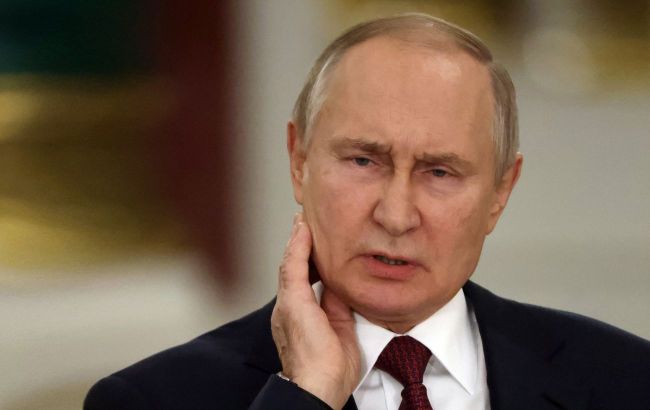 Photo: Vladimir Putin (Getty Images)
A State Duma (parliament) deputy from the Communist Party of the Russian Federation (KPRF), Renat Suleimanov, stated that the Russian economy may not withstand a prolonged continuation of the war against Ukraine and stressed the need for its swift end, according to the Agentstvo. Novosti Telegram channel.
First doubts about economic stability voiced in the State Duma
A source familiar with the situation said that, for the first time at this level in the Russian parliament, an opinion has been voiced about the possible inability of the Russian economy to withstand a prolonged war.
According to the source, the statement was made by Renat Suleimanov in an interview with the Kontinent Sibir.
Budget under pressure from military spending
The source notes that the deputy pointed to a heavy burden on the federal budget, a significant share of which, he said, is allocated to defense and security — around 40%.
According to the interlocutor, Suleimanov stressed that such spending supports employment in the defense sector but at the same time fuels inflation and limits investment in other areas.
The parliamentarian also reportedly stated that the economy is experiencing structural imbalances in spending, which is affecting long-term development.
Social consequences and post-war risks
According to the source, the deputy also drew attention to possible challenges in the event of a reduction in military spending.
The interlocutor claims that he referred to risks related to employment and the social adaptation of a large number of people employed in the defense industry and military sector.
The source also said that Renat Suleimanov mentioned significant costs for the reconstruction of territories where infrastructure and housing are reportedly destroyed.
Shift in rhetoric ahead of elections
According to sources, the deputy previously held a more hardline position on the conflict, but his rhetoric has now changed.
Interlocutors suggest this may be linked to broader political processes and the approaching election cycle.
Sources say that a cautious adjustment of public statements is generally being observed within the Russian political environment, which may reflect changing public sentiment.
During a visit to Beijing, Russian leader Vladimir Putin intends to once again discuss with Chinese leader Xi Jinping the issue of support for the construction of the Power of Siberia 2 gas pipeline. This is effectively Moscow’s fifth attempt in four years to advance the project.
Within Putin’s circle, representatives associated with Security Council Secretary Sergei Shoigu are being sidelined. According to sources, the replacement of the head of the State Duma defense committee is being considered, with General Alexander Lapin potentially being appointed to the position, despite earlier criticism of his wartime performance.